
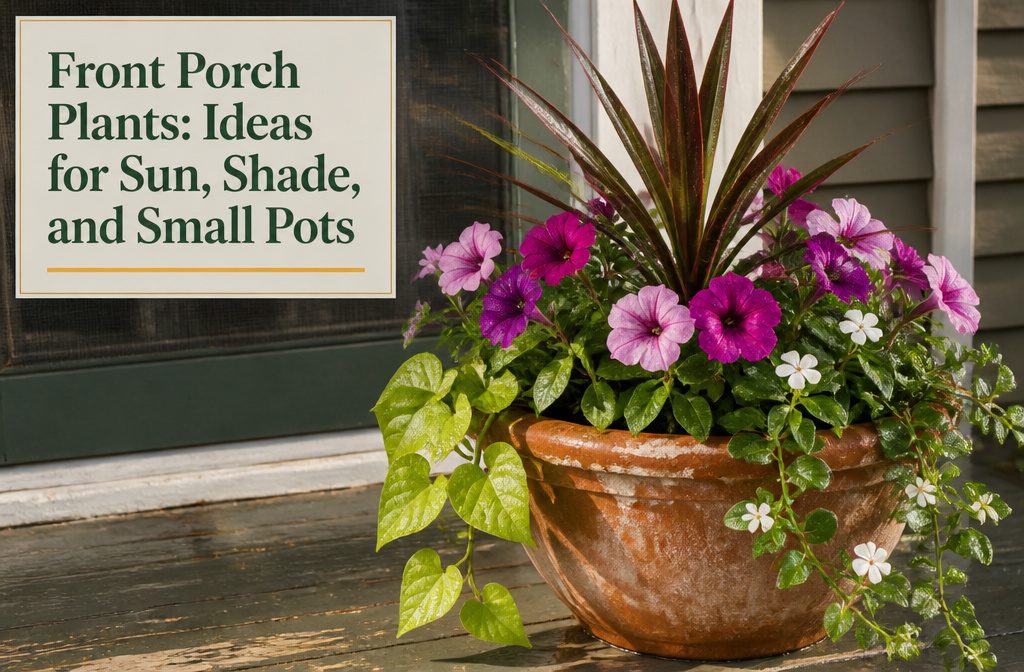
A full-sun planter with a dracaena spike in the center, petunias around it, and sweet potato vine and vinca vine trailing over the rim is the pick, because each plant has one job: height, volume, spill.
Skip it if your porch gets little direct sun; the petunias thin out and bloom poorly, and the shade picks fit better.
1. Best Full-Sun Plants
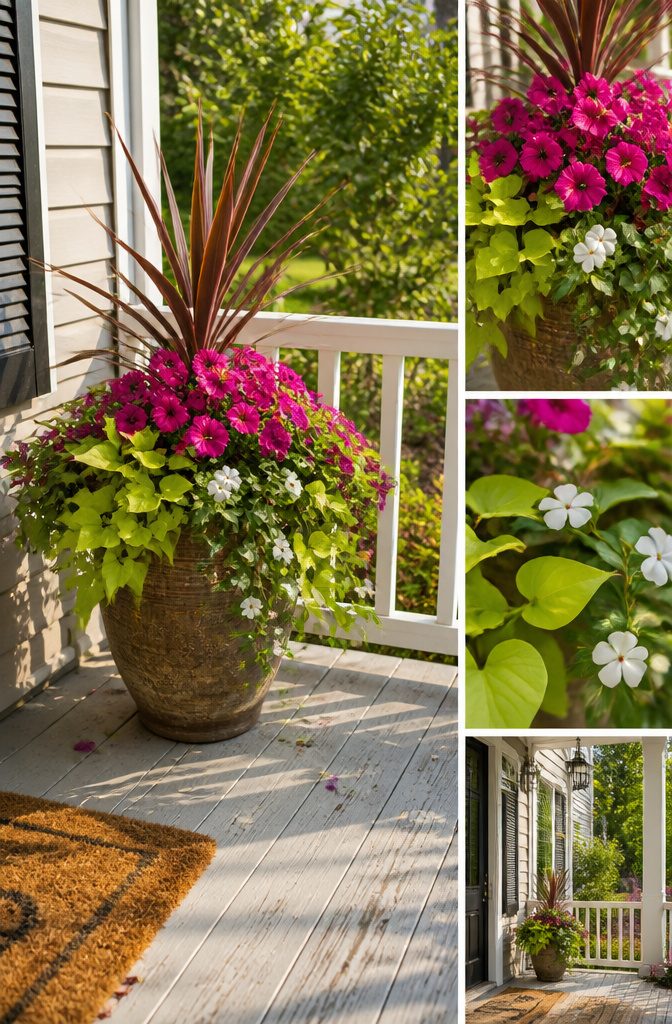
A porch that gets full sun most of the day suits a planter of sweet potato vine, petunias, a dracaena spike and vinca vine.
The dracaena spike stands in the center for height, petunias fill the middle with color, and the sweet potato vine and vinca vine trail over the rim.
If you’d rather build something different, nemesia, sweet alyssum, calibrachoa, verbena, geranium, lantana and bacopa all do well in full-sun pots. Geranium and lantana make fuller mounds, while calibrachoa, verbena, alyssum and bacopa soften the edge of the container.
Skip this group if your porch doesn’t get much direct sun.
These plants are grown for sun-fed flowers and will thin out and bloom poorly without it. The part-sun and shade picks will serve you better.
Recommended Products

Artificial Cedar Trees Set of 2, Elegant Front Porch Decor: Designed for symmetrical placement, these 3FT faux cedar topiary trees instantly upgrade your entryway or front door with a clean, upscale look that adds a refined evergreen style to your home.
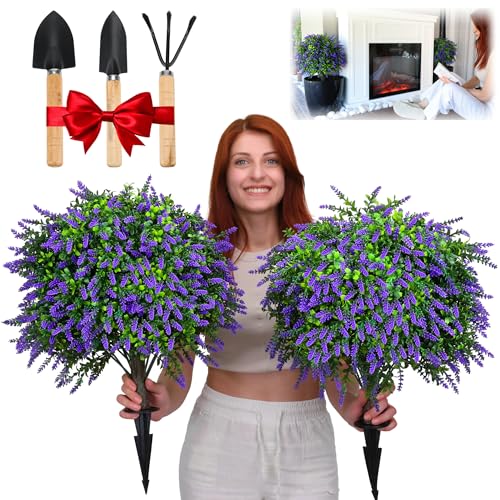
FULL, LIFELIKE LAVENDER BALLS: Dense purple lavender sprigs on a lush, rounded shape that looks natural on a porch, patio or front door. Made from non-toxic, odorless polyethylene, safe around kids and pets.

24 Bundles – More Value, More Colors – Get 24 bundles of artificial realistic daisy flowers with eucalyptus leaves and greenery mix, offering 4 vibrant colors (red, purple, rose, yellow) with 6 bundles per color. Each bundle has 7 flexible stems at 13 inches tall and 7.5 inches wide, giving you enough volume to fill window boxes, planters, or vases without buying extra packs.
2. Best Part-Sun Plants
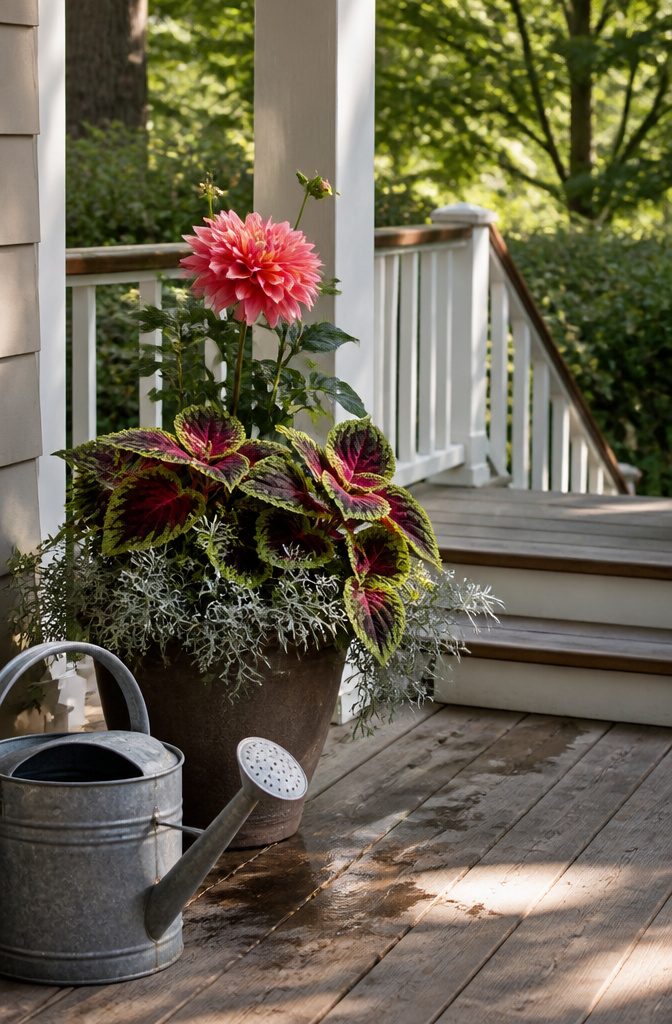
Part-sun plants suit a porch that gets some direct light but not all day.
Skip this group if your porch bakes in full sun or sits in deep shade, since these plants want a middle ground and the extremes will scorch or starve them.
Dahlia and angelonia supply the flowers: dahlias give big, bold blooms, and angelonia sends up upright spikes.
Coleus is the safest pick if you’re new, because its colorful leaves carry a pot even when nothing is blooming. Artemisia adds silvery, finely cut foliage that settles louder neighbors.
Aeonium brings sculptural rosettes, and calceolaria adds odd, pouch-shaped blooms that make a small pot stand out. For a simple pairing, put one flowering plant with one foliage plant in the same container.
Recommended Products

WHAT'S INCLUDED IN THIS DWARF MIX PETUNIA SEED 2-PACK? This 2-pack contains 6,000 heirloom, non-GMO Dwarf Mix Petunia seeds total, with 3,000 seeds per envelope (0.4g each, 0.8g total). The mix produces red, rose, pink, salmon, violet, and white flowers on compact plants.

IMPATIENS TOM THUMB MIX, 300 SEEDS: HOME GROWN Tom Thumb Mix (Impatiens balsamina) produces cup-shaped double blooms in purple, pink, red, salmon, and white on compact 12–16 in. dwarf plants. Heirloom, open-pollinated, and non-GMO.

DWARF MIX PETUNIA SEEDS, 3,000 SEEDS: Each envelope contains 3,000 heirloom, non-GMO Dwarf Mix Petunia seeds (0.4g). The mix produces red, rose, pink, salmon, violet, and white flowers on compact plants approximately 8–12 inches tall. Grown as an annual in USDA Zones 2–11.
3. Shade-to-Part-Sun Plants
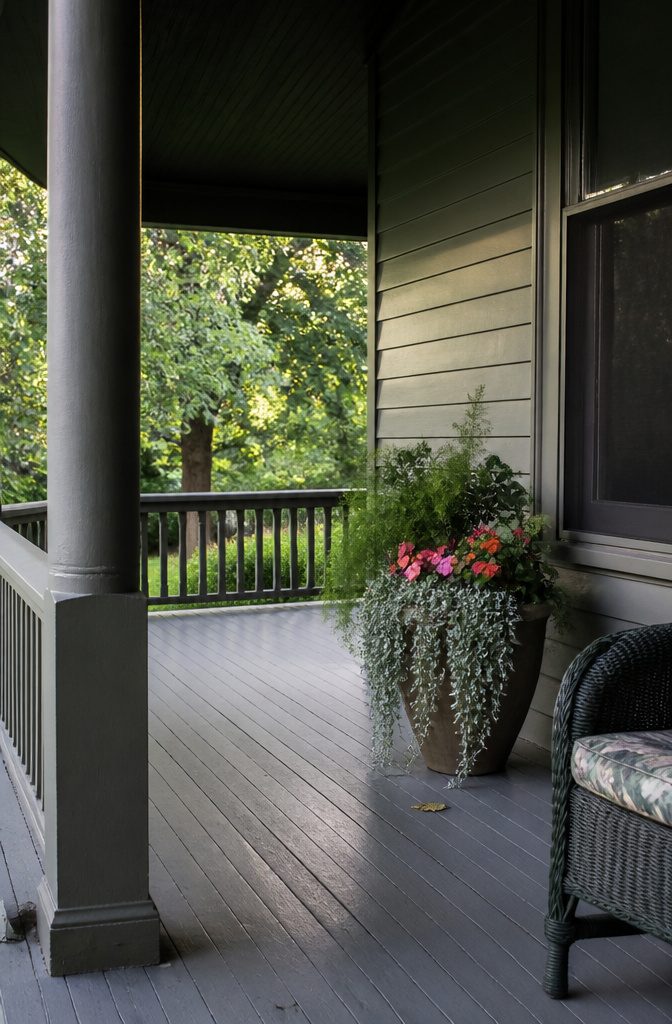
Pick from this group if your porch sits under a deep roof, faces away from the sun, or gets shaded by a tree. Silver Falls, ivy, and creeping Jenny spill over the pot rim.
False shamrock, impatiens, begonia, and fuchsia give you leaf shape and flower color closer to eye level. Asparagus fern adds a feathery, airy texture, and jade brings a thick, glossy leaf that looks different from everything around it.
A porch that gets hot, all-day sun should skip this group.
These plants suit darker spots, and strong sun will leave them scorched and worn. Choose from the full-sun plants instead.
Recommended Products

Gothic Realistic Vibe & Low-Maintenance: The artificial purple ivy boasts vivid purple foliage with fine textures, perfectly matching Gothic decor. No watering, pruning, or sunlight required—it stays fresh year-round, ideal for anyone who wants greenery without the hassle.
BEAUTIFUL HANGING FLOWERS: HyeFlora artificial hanging orchid flower has rich blossom and leaves filled in a handmade cone shape rattan basket.

POT INCLUDED – White melamine pot comes with fake plants. It's Medium/Small Artificial Plants for Home Decor Indoor with Pot. (Silk Plants for Home Decor Indoor / Faux Hanging Plants Indoor)
4. Group Similar Pots
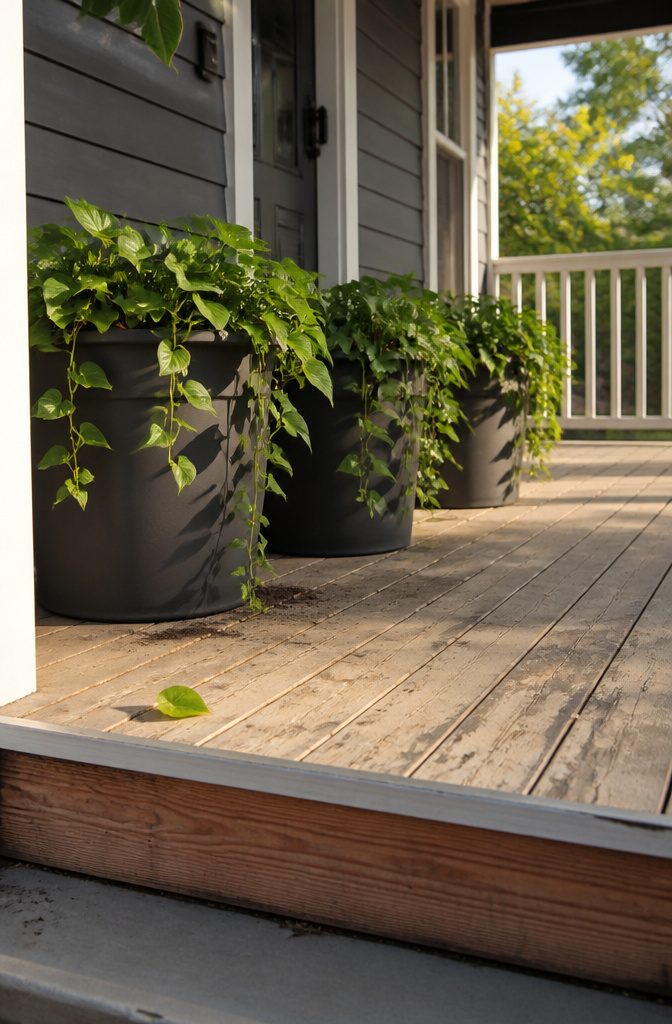
Buy hanging baskets at the nursery, take off the hangers, and set the plants straight into your porch planters. Then group similar plants in similar pots, so the cluster reads as one statement instead of a scatter of single containers.
Three matching planters holding the same trailing plant look planned. Three different plants in three different pots look accidental.
Skip this if your porch is very small or you only have one pot.
Grouping needs a few containers to work, and on a narrow porch a cluster just crowds the door. In that case, plant one good pot full and let it stand alone.
Recommended Products

Productive: Each coleus seeds packet contains 300 mg (about 900 seeds), providing a bountiful supply for all your gardening needs. This tender perennial mix produces leaves in a stunning array of colors in shades of yellow, green, pink, red, and maroon. Leaves will color as they mature outdoors.

Vivid Shade Foliage: Coleus plant seeds grow 12 in tall with tropical magentas, greens, yellows & reds—ideal flower seeds for borders, pots, patios. This seed packets bulk seeds mix well with canna, hibiscus, and other elegant tropical blooms.

Fast, reliable sprouting: These Marigolds plant seeds are easy to start indoors 4–6 weeks before frost or direct sow; Marigold seeds for planting outdoors & indoors germinate in 7–21 days at 65–80 °F, plant 1/4" deep. Ideal garden seeds for beginners.
5. Grocery-Store Plants
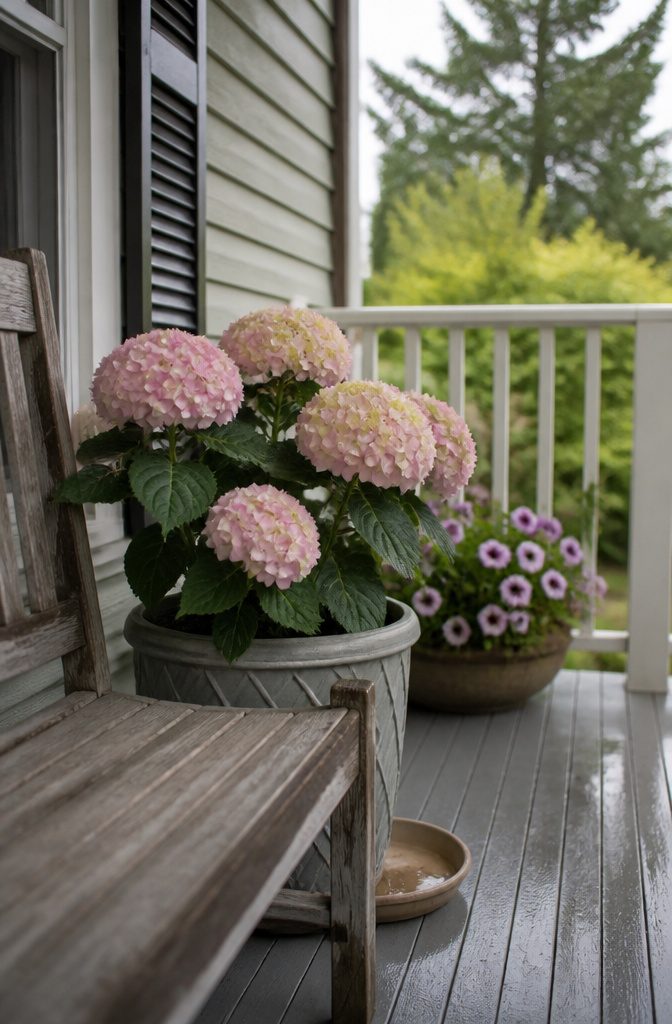
A foil-wrapped hydrangea from a Mother’s Day gift can go into a front-porch planter as a change from annuals. Take off the foil, pot it up, and set it where the petunias would have gone.
One caveat comes with it, and it may be false: gift hydrangeas of this type are said to be bred for indoor display, not for planting outdoors.
If you try it, moving the plant into the yard in fall is a fair way to find out whether it survives.
Treat this as a gamble. If you want a sure result, skip it and buy a hydrangea sold for outdoor planting at a nursery.
Recommended Products

✅ Package Include: 2 bundles artificial bougainvillea Trailing flower Vines. Fully flowers and green leaves near nature life like real flower/leaves.

✅ Package Include: 2 bundles artificial bougainvillea Trailing flower Vines. Fully flowers and leaves near nature life like real flower/leaves.

✅ Package Include: 2 bundles artificial bougainvillea Trailing flower Vines. Fully flowers and leaves near nature life like real flower/leaves.
6. Faux Plants
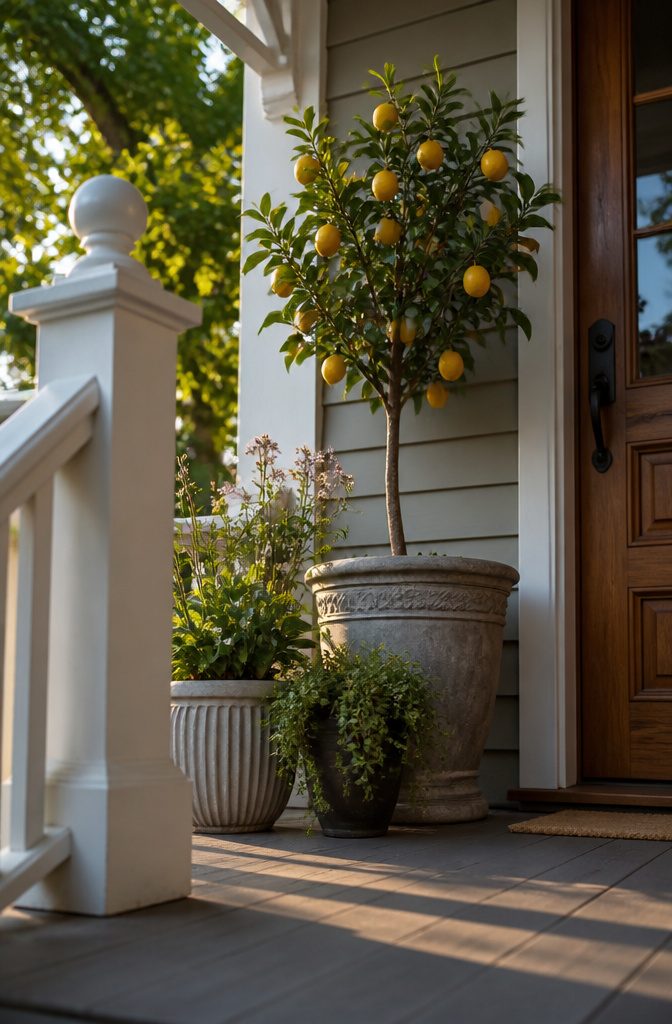
Faux lemon trees in the planters beside your front door make a statement with no watering at all.
Faux flowers do the same job in fall, filling the pots without a trip to the garden center. This fits you if you forget to water or travel often, because nothing can wilt while you’re away.
Faux plants are not alive, so they do nothing for pollinators or other wildlife.
They also add no scent and don’t change with the seasons. If supporting wildlife matters to you, use faux plants in one spot and keep the rest live.
One faux lemon tree by the door, with live native plants in the other pots, gives you a reliable focal point and still helps local wildlife.
Recommended Products


4 Bundles Value Set – More Flowers, Better Price – Get 4 full bunches of fall hanging artificial silk flowers for less than others charge for just 2. Each bouquet is densely layered with multi-textured petals in warm Orange, Brown, and Yellow – a 3-color mix that fills planters with instant autumn volume. Looks real on the porch from any distance, without the daily watering, deadheading, or messy fallen leaves.

UV Resistant & Fade-Proof – Crafted with high-quality UV-resistant materials, these artificial fall flowers withstand direct sunlight and harsh weather without fading. Perfect for long-term outdoor display on your porch, patio, or garden, they stay vibrant all season long.
7. Move Indoor Plants Outside
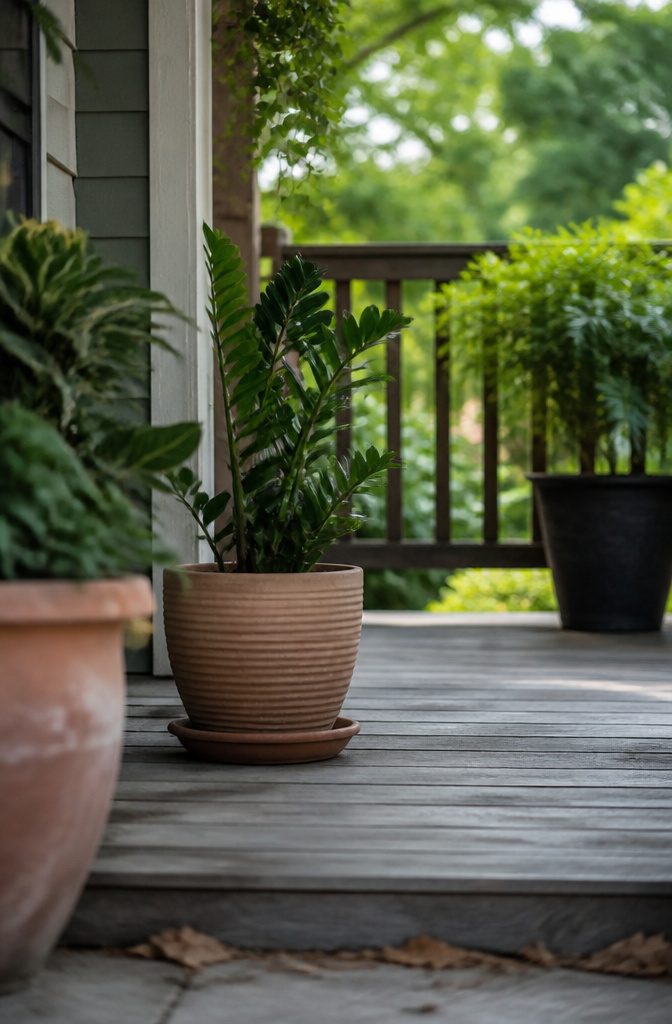
Nothing says a houseplant has to stay indoors for the summer.
If your porch suits it, carry it out. A ZZ plant is a good first candidate because it is practically indestructible, and it can go straight into a planter that matches the rest of your porch pots.
Skip this if your porch light is harsher than the plant tolerates. A plant that has spent the year behind a window isn’t used to hard exposure, so check how much light the spot gets before you move anything out.
If the plant looks unhappy after a few days, carry it back inside; it’s only a pot, and nothing is lost.
Recommended Products

WHAT IS IMPATIENS TOM THUMB MIX? HOME GROWN Tom Thumb Mix is a dwarf Balsam Impatiens (Impatiens balsamina) producing double blooms in purple, pink, red, salmon, and white. This 2 pack contains 600 heirloom, open-pollinated, non-GMO seeds total.

WHAT VARIETY AM I GETTING? Dwarf Fairy Mix Candytuft (Iberis umbellata) is a compact annual with fragrant flowers in pink, carmine, white, and lavender. This 2-pack contains 500 heirloom, open-pollinated, non-GMO seeds total, 250 seeds per pack.

Lightweight Planter: Keep your plants safe and sound with this large plant pot designed to work well with many different kinds of plants from flowers to shrubs to herbs
8. Succulents in Small Pots
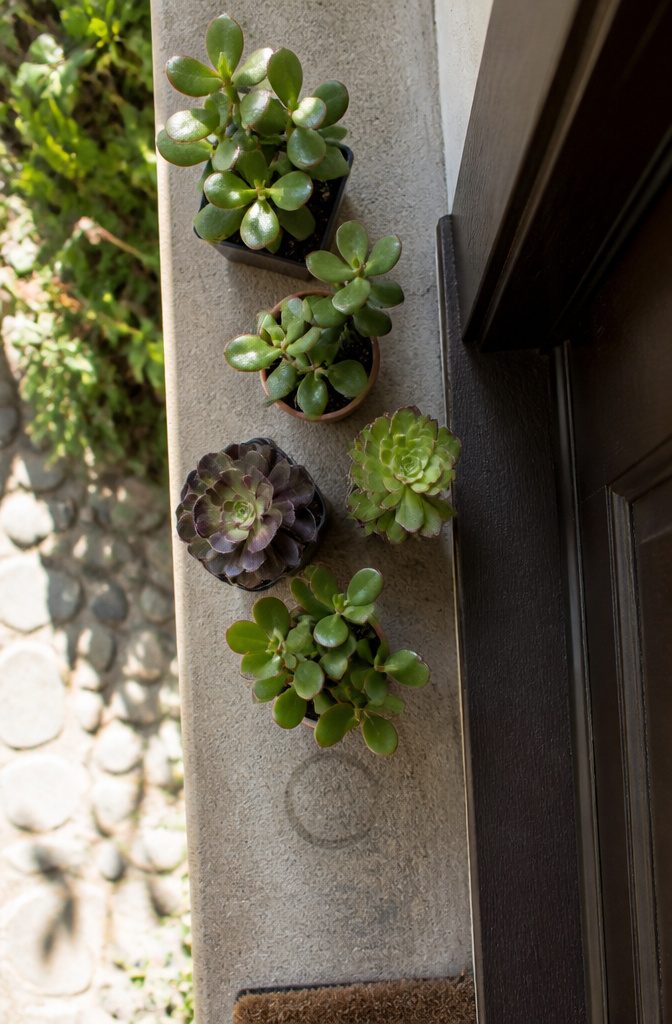
Succulents forgive the mistakes beginners make most, like a missed watering or a pot that dries out for a week.
Jade and aeonium both suit a small pot, and a hanging basket by the front door puts a planting at eye level without using any floor space.
The cost is size. A small pot holds far less than a full planter, so one or two will look sparse from the street unless you group several together.
Skip succulents if your porch sits in deep shade, since they want sun, or if you want a lush, overflowing display from a single container. In either case, a larger planter will give you more for your money.
Recommended Products

Packaging list :2 packs of artificial hanging vines, each with 19 forks and lots of flowers and leaves.

Lush & Realistic Greenery: Designed with detailed eucalyptus leaves and natural trailing vines, these artificial hanging plants create a full, vibrant look that instantly refreshes any space without looking fake.

Look Real Artificial Trailing Plants: Lifelike fake ivy trailing plants are crafted with premium materials for intricate details and natural textures that bring lifelike, elegant beauty to any space.
9. Height, Volume, and Trailing Plants
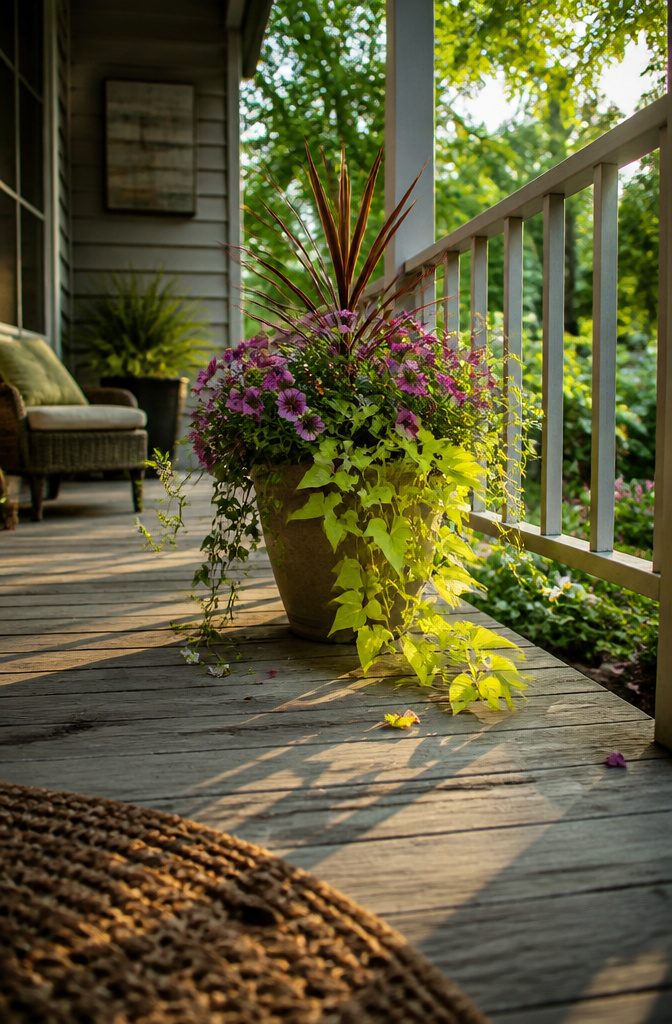
Build a mixed planter around three jobs: height, volume, and trailing drama.
A dracaena spike in the center supplies the height. Wave petunias around it supply the volume.
Sweet potato vine and vinca vine go along the rim to spill over the edge. Sweet potato vine has a light green color and fills out as it cascades down the pot.
The formula works with other plants too: one tall plant in the center, one mounding plant around it, one trailing plant at the rim. Choose each by its job, not its name.
Skip this approach if you want a single-plant pot. One large plant in a statement container is simpler, and it leaves no room for fillers or vines.
Recommended Products

Beautiful - Full color seed packet of Sweet Pea (Lathyrus odoratus) flowers. Tall vining annual variety with large fragrant blossoms in a variety of colors including white, salmon, pink, rose, blue and lavender. Enjoy planting outdoors in the garden or indoors as cut flowers. Minimum of 5g per packet (about 60 seeds).

Unique Bloom Color: Pink Surprise calendula heirloom seeds grow 16-inch mounding plants with double peach-pink blooms. These calendula flowers seeds brighten borders and containers from spring through fall.

STYLISH & CONVENIENT: The Saturn Planter set features drainage holes and detachable saucer trays, so it's easy to prevent messes and keep plant roots healthy while still looking fabulous.
Plant a Mixed Container
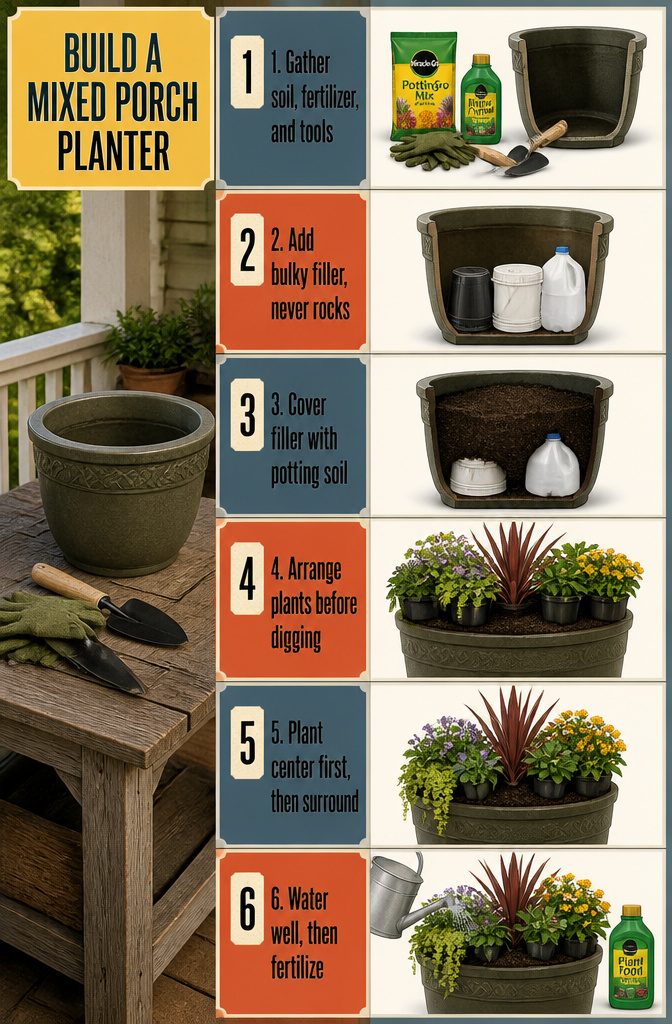
- Gather a planter, outdoor potting soil (Miracle-Gro is a common pick), fertilizer, gloves, and a small shovel. The gloves and shovel are optional.
- In a large planter, fill the bottom with light, bulky filler: an upside-down nursery pot, an old bucket, or plastic milk jugs. Skip rocks and bricks, which make a full planter very hard to move. The filler also means you buy less soil.
- Pour potting soil over the filler until the planter is filled.
- Set each plant on the soil where you think it will go, so you can check the arrangement before digging.
- Plant the central spiky plant first.
- Add the other plants one at a time around it.
- Water well, then fertilize.
Recommended Products

Artificial Hanging Flowers: Package include 2 bundles artificial violets with eucalyptus trailing flower Vines. Our artificial flowers are perfect for any space. They are also perfect choice for spring indoor and outdoor decorations.

✅ Package Include: 2 bundles artificial bougainvillea Trailing flower Vines. Fully flowers and leaves near nature life like real flower/leaves.

✅ Package Include: 2 bundles artificial bougainvillea Trailing flower Vines. Fully flowers and leaves near nature life like real flower/leaves.
Keep Container Plants Healthy
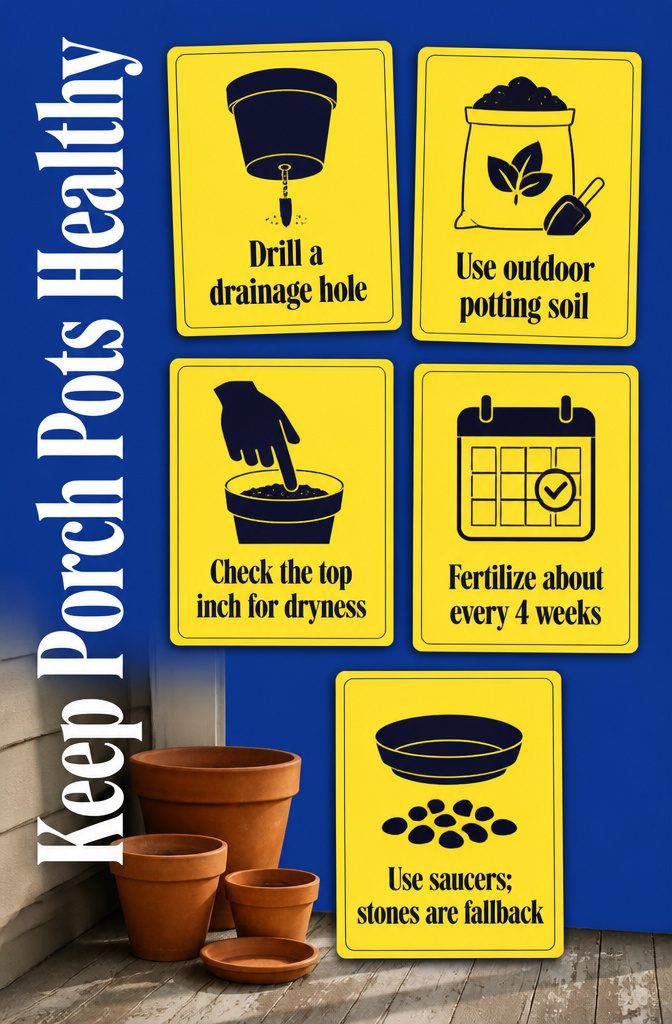
Five habits keep porch pots alive through summer:
- Roots sitting in water rot, so drill a drainage hole if the planter doesn’t have one.
- Fill pots with potting soil made for outdoor planters. Regular dirt from the yard won’t do the job.
- Water when the soil feels dry. Push a finger into the top inch or so to check, rather than watering on a fixed day.
- Fertilize about once every 4 weeks.
- Set a saucer under each pot to protect the porch. If you’d rather skip saucers, layer small stones across the bottom and fill the rest with soil. Treat the stones as a fallback, since a drainage hole does the job better.
Frequently Asked Questions
What should I put in the bottom of a large planter?
Use a light, bulky filler such as an upside-down nursery pot, an old bucket, or empty plastic milk jugs, then pour potting soil over it.
Avoid rocks and bricks, which can make a full planter very hard to move. A filler also means you buy less soil.
How do I plant flowers in a pot for front porch plants?
Fill the pot with outdoor potting soil, then set the plants on top without digging to check the layout. Plant the tall, spiky center plant first and add the others around it one at a time.
Water well, then fertilize. Make sure the pot has a drainage hole so the roots don’t sit in water and rot.