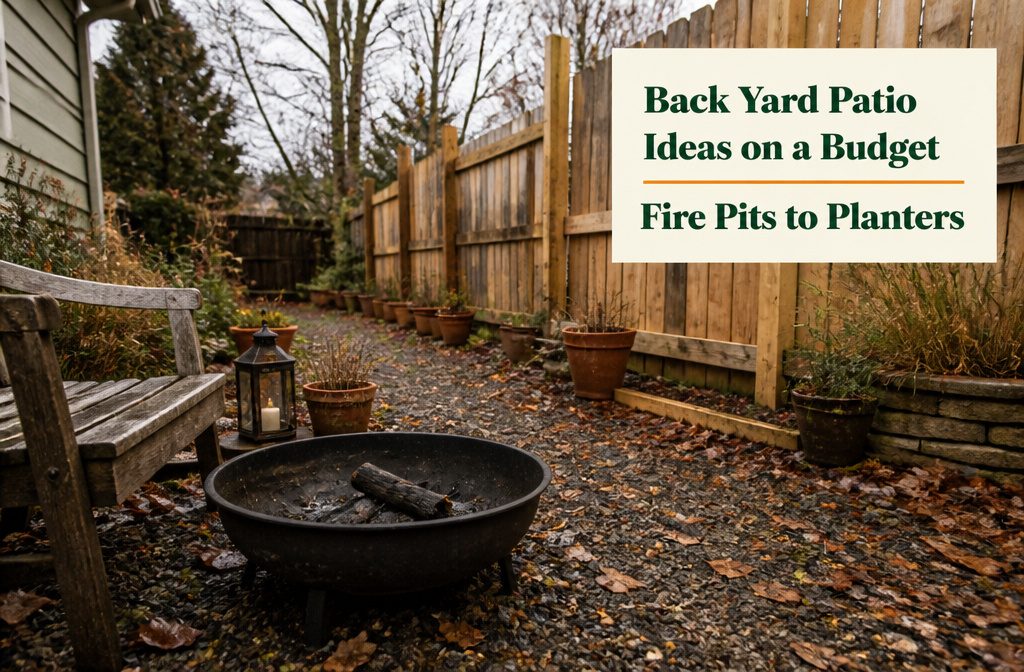
Projects here run from $15 thrifted lanterns to a privacy fence at $6–$12 per linear foot, and the one to start with is whichever fixes the spot that bothers you most.
Finish that area first: $400 spread across 6 half-done projects changes nothing, while a full makeover fits inside $300–$1,000.
1. Thrifted Decor and Vintage Finds
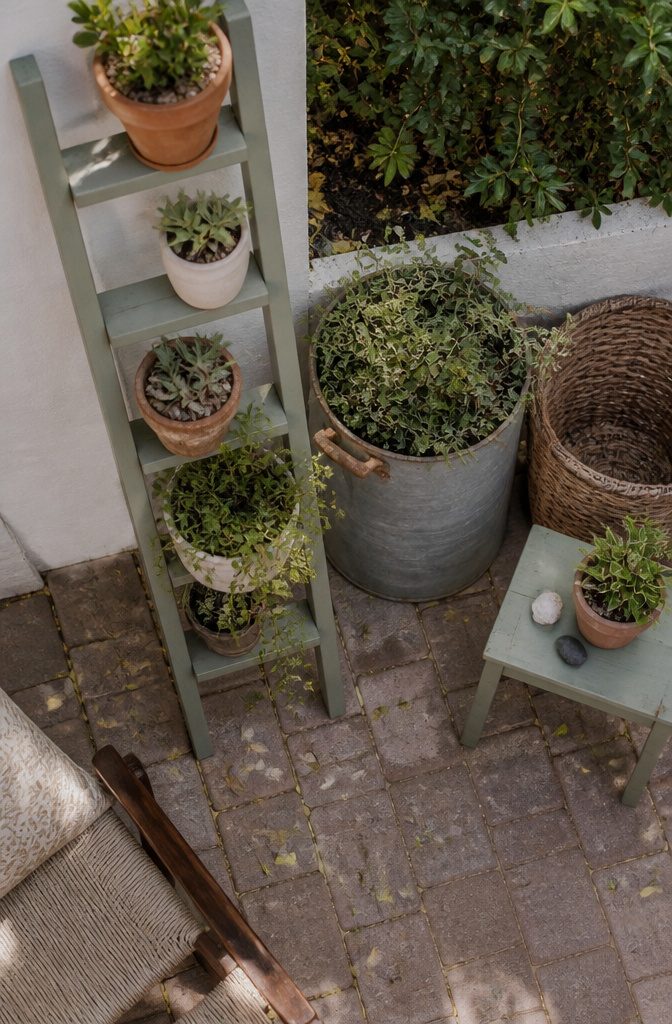
Plan on spending $15–$80. Shop thrift stores on weekday mornings, when new inventory is fresh, and look for metal lanterns, ceramic planters, woven baskets and side tables marked "outdoor-safe."
An old ladder leaned against a wall holds a row of pots, and a vintage container makes a planter with no extra purchase.
Mismatched finds look collected instead of random after two coats of rust-proof spray paint in matte black, oil-rubbed bronze or sage green.
The paint also hides blemishes. Brush a clear, UV-resistant sealer onto terracotta so freeze-thaw cycles don’t crack it, and touch up chips every spring to hold rust off.
Check any thrifted electrical item for frayed wires before you plug it in.
Recommended Products

Clear Christmas Lights: 2 pack set total 300 count Incandescent lights included, 150 count per strand with bulb space 2.76in, 2.5V and 0.43W per bulbs, built-in 3A fuse for safety use. Extra bulbs and fuses included

【Festive Mini Christmas Lights Set】This set includes 100 transparent incandescent mini-lights on 20 ft white wire, with bulbs spaced 2.4-inche apart and 18-inch lead wire. As classic Christmas lights outdoor and daily decorative outdoor string lights, it is perfect for christmas decorations or ramadan decorations, with the ability to connect up to 5 light strings end-to-end.
2. String Lights and Candles
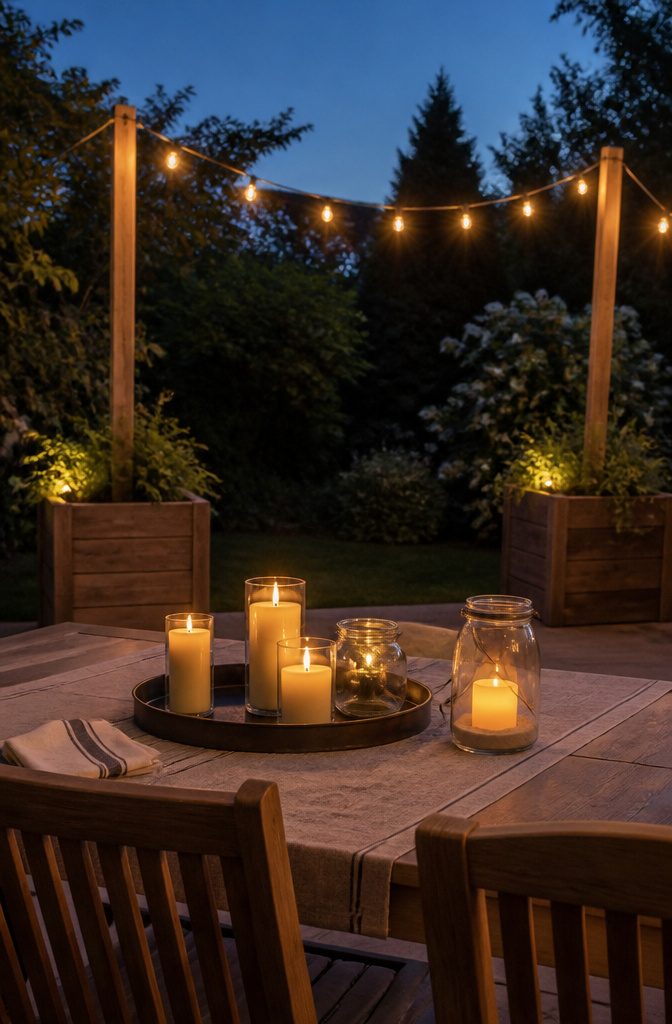
Outdoor-rated LED string lights last 25,000+ hours and use up to 75% less energy than incandescents, so they should be your main light. Solar strings skip the extension cord, which helps if your patio has no outlet nearby.
For anchor points, sink 8-ft wooden posts into planter boxes filled with quick-set concrete, or screw heavy-duty hooks into a fascia board. Budget $35–$120 for the setup.
Candles run $15–$60 and suit dinners better.
Group citronella candles of different heights on a metal tray, or set candles in glass jar lanterns weighted with sand. Keep open flames at least 12 inches from fabrics, and switch to flameless candles on windy nights.
Recommended Products

【Solar Powered & USB Charging】52FT solar string lights with 15+1 shatterproof st38 LED bulbs (E12 base) – harness solar energy for friendly lighting, no outlet needed! Equipped with dual solar/USB charging, fully charged in just 4 hours. Provides up to 30+ hours of lasting illumination on a full charge, rain or shine. Ideal for outdoor decor in patio, garden, and backyard. These solar lights outdoor waterproof help cut electricity bills while going green

Ideal Solar Outdoor Lights: 27 ft long durable Chistmas string lights with 12 LED lights and detachable solar panel with on/off switch located on the back. 20" between bulbs, 6' from solar panel to the first bulb. The lighted portion is 20 feet. LED bulbs last 20,000 hours and solar panel is rated at 1,000 charge lifespan (can last approximately 2.5 years). Direct sunlight is best for a full charge, though you can get some use from charging in indirect light.

Ready-to-Go Setup: 108 feet solar string lights outdoor waterproof featured 2 feet spacing, offering superior lighting performance and better value compared to 3 feet spacing. The string lights comes with 50 LED Shatterproof bulbs +2 extra bulbs(0.15W LED G40 bulb with E12 Candelabra base) for instant replacement and 55 pieces of cable ties for quick and secure fixing. A solar panel mounting clip is included as a bonus, allowing you to freely attach the string lights onto a fence. Please note: The string lights cannot be connected. Driven by product iterations, select orders are automatically upgraded to our new solar panel with 50% longer battery life. Rest assured and enjoy the upgrade!
3. Painted Floor or Gravel
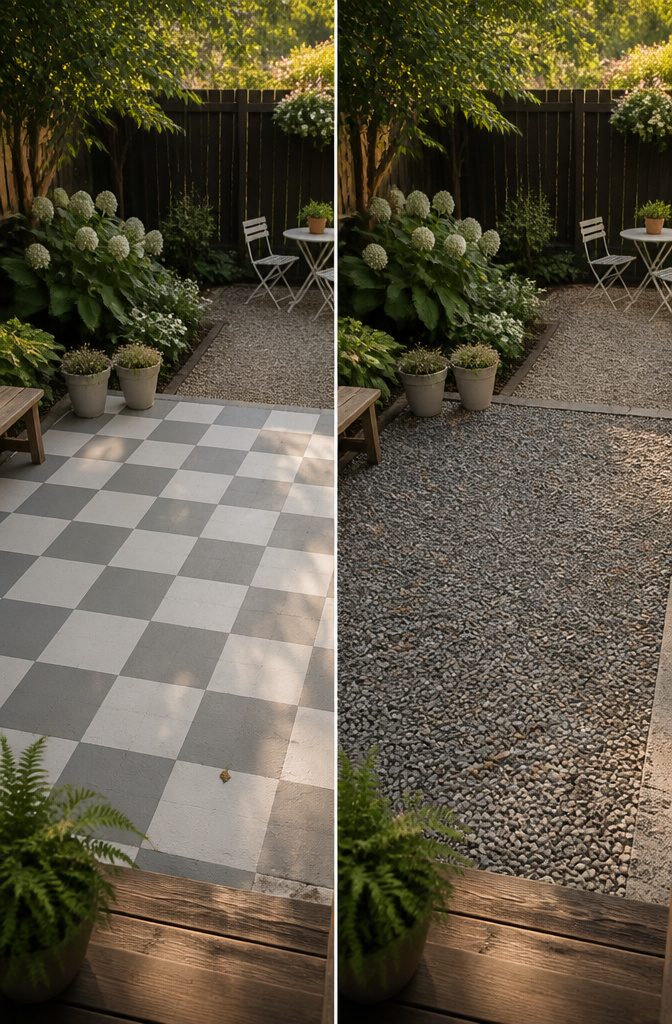
Painted concrete gives you a patterned floor without the cost of tile, at roughly $60–$150. Pressure-wash the slab, degrease it, and let it dry 24 hours before you open a paint can.
Patch chips with fast-setting concrete filler and sand level, prime once with a masonry bonding primer, then roll on two thin coats of slip-resistant porch paint. A stencil and painter’s tape add a checkerboard or tile pattern.
Light shades like dove gray reflect heat, which helps on bare feet. Reseal with clear sealant every other year.
Gravel works for paths, borders, and ground cover. Remove the grass, lay landscape fabric to block weeds, define the edges, and compact the base layers so the surface stays firm.
Recommended Products

COMPLETE 3-PACK HANGING KIT: Includes 3 black 11-inch hanging chains and 3 screw eyes made of 304 stainless steel. A convenient all-in-one set for hanging plants, bird feeders, planters, and more.

DECORATE YOUR HOUSE MORE BEAUTIFULLY: With the unique nostalgia of vintage iron art for compatible decorative, this wall hanging brackets is very great for hanging various flowers, plants, wind chimes, lanterns, bird feeder holiday decorations, string lights and other ornaments to create a landscaping space and charming atmosphere to your indoor-outdoor place.

Halloween Lighted Pumpkin Garden Stakes: 3 pack light up metal Halloween pumpkins garden stakes would be a perfect decor for haunted ambiance, spreading charming festive atmosphere, create a scary feel to your decorations. When you receive the product, it may be slightly deformed due to transportation, please adjust by hand to the best condition
4. Outdoor Living Room and Rug
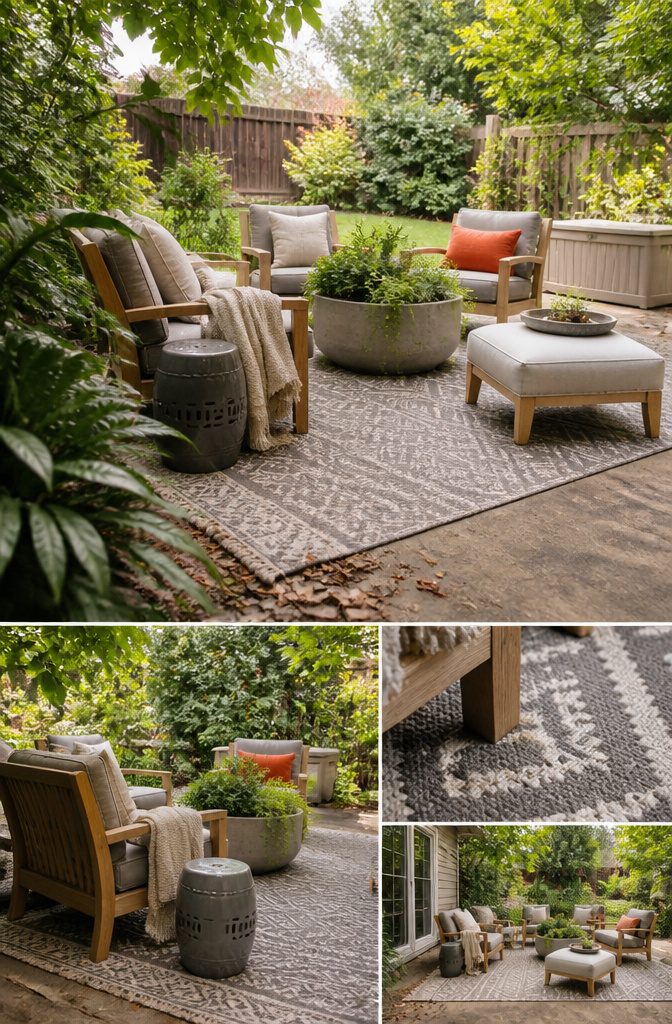
Arrange seating around a focal point, such as a fire pit, coffee table or oversized planter, as you would in a living room.
Add weather-resistant pillows, a blanket and an ottoman, and use a garden stool or stump as a side table. Budget $50–$300.
A rug hides worn slabs for $40–$200.
Let it extend at least 12 inches beyond the chair edges when the chairs are pulled out. Polypropylene, recycled PET and bamboo dry quickly.
Keep the base neutral, like gray cushions or natural wood, and swap accents by season: pastels in spring, bright colors in summer, warm textiles in autumn, blankets and evergreen in winter.
Move cushions into a deck box before rain to prevent mold.
Recommended Products
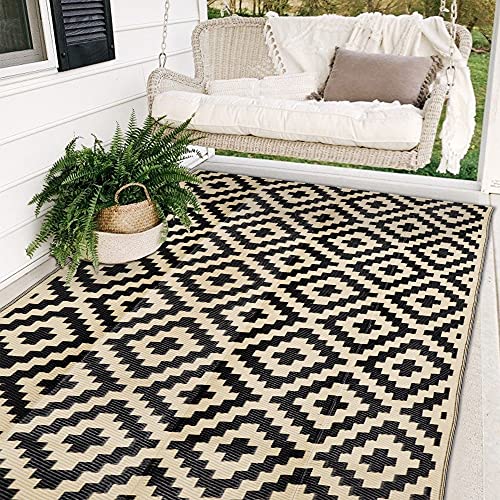
REVERSIBLE MATS: With timeless design, this plastic patio rug is elegant as it is functional, use on your patio with outdoor furniture and accessories to show off your personal style.
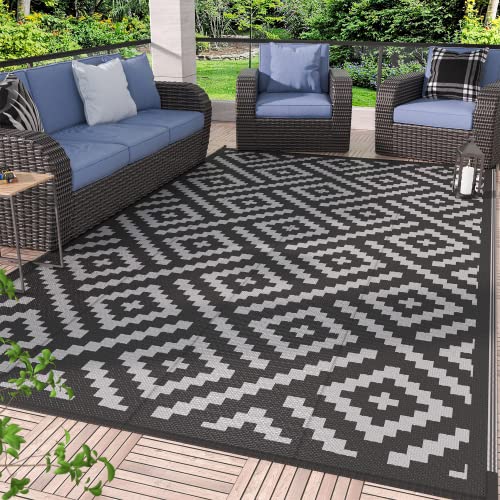
Extended Lifespan · Dual-Sided Wear Resistance: The GENIMO outdoor rug features a reversible design with two classic geometric patterns, doubling its lifespan through alternating use. The dark-toned surface effectively conceals dirt and stains, maintaining a pristine appearance even in rugged environments. Perfect outdoor patio rugs, rv mats and camping rugs for indoor-outdoor transition zones—effortlessly switch sides for practicality and timeless elegance

Reversible Design: Pauwer outdoor rugs feature classic leaf pattern on both sides, allowing you to refresh your patio with a simple flip. Perfect outdoor patio balcony decor adds charm and elegance to your outdoor space
5. DIY Furniture and Pallet Seating
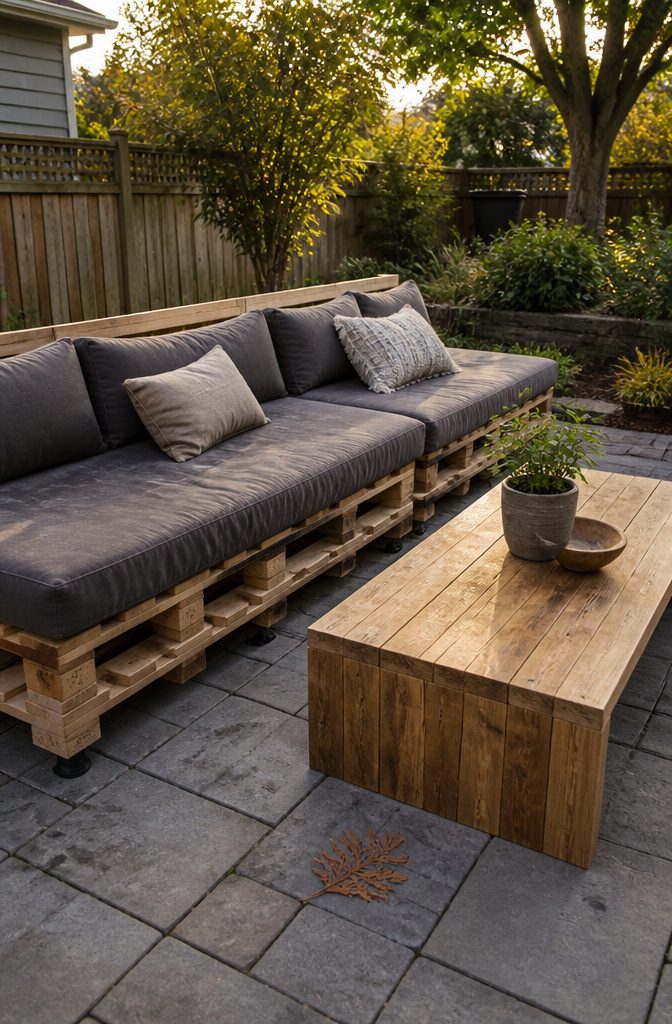
Retail outdoor sets can run up to $3,000. A box-leg coffee table or X-frame picnic bench built from untreated 2×4s or pallet boards costs about $75–$200.
Skip boards with structural knots, sand the edges, and join the pieces with exterior-grade screws and waterproof wood glue before staining. Reclaimed cedar from a salvage yard is worth hunting for, since its natural oils deter insects and rot.
For lounging, screw two pallets together lengthwise, two pallets high, and top them with foam wrapped in waterproof fabric ($0–$150).
Use heat-treated (HT) pallets only, and set the frame on rubber feet or concrete pavers so moisture can’t wick up. Storage or modular pieces make good later upgrades.
Recommended Products

Ideal for application on inside or outside metal, concrete, ceramic and wood surfaces including stairs, pool decks, ramps and walkways

BAREFOOT‑FRIENDLY TRACTION: Creates a comfortable, textured finish designed to add grip and help prevent slipping in high foot-traffic areas

Safe-T-Deck is an acrylic granulated deck coating designed to preserve, protect & renew decks, patios, walkways, ramps & more. Suitable for use on properly prepared exterior wood, and concrete/masonry surfaces.
6. A Low-Cost Privacy Fence
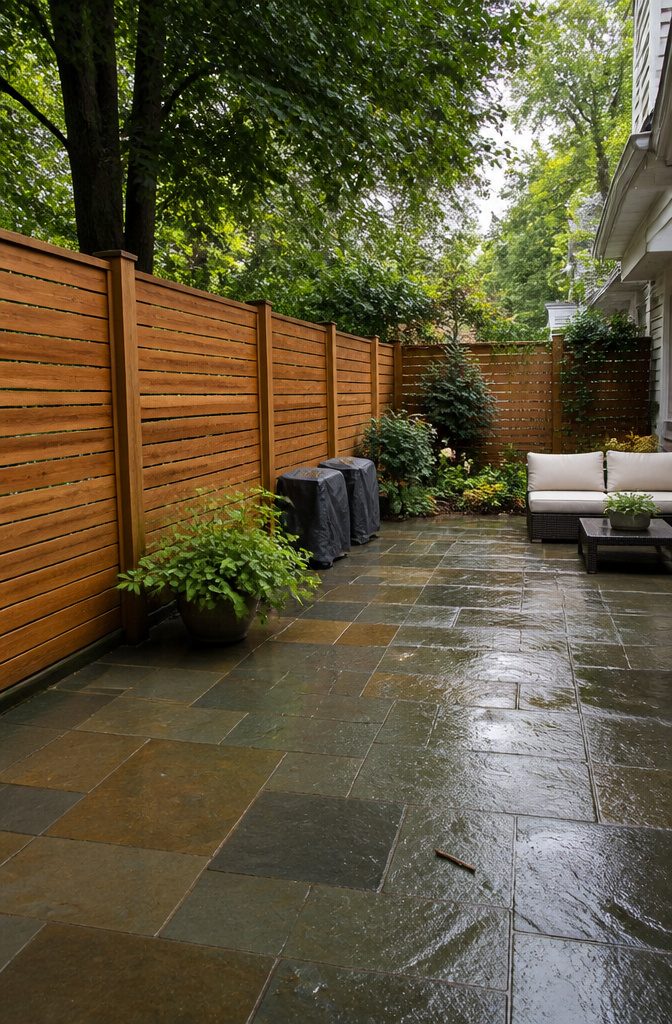
A modest screen blocks street noise, hides trash cans, and frames the patio.
Mark the patio’s perimeter and set 4×4 pressure-treated posts 24 inches deep in concrete, because the posts carry the whole fence. Attach 1×6 cedar boards horizontally between them with ¼-inch gaps, which let air through and give the fence a modern look.
Seal or stain the cedar to keep moisture out. Budget $6–$12 per linear foot.
Spray for mildew each spring and check for loose boards after storms. Replace warped slats quickly so the screen keeps its privacy.
If you already have a chain-link fence, skip the build. Weave 6-ft bamboo canes through the wire and secure them with zip ties for a tropical look under $80.
Recommended Products

[Connectable Christmas Lights Indoor & Outdoor]:Create a soft, inviting glow with these warm white Christmas lights, featuring 240 LEDs on a 88ft strand. Connect multiple strands to decorate larger spaces, from rooms and windows to patios and gardens. Perfect for Christmas, weddings, parties and everyday decorating.

Charming Christmas Lights: The illuminated section of the outdoor Christmas lights spans 18.5 ft, with a 1.5 ft leading wire and a bulb spacing of 2.25 inches. Each bulb works at a voltage of 2.5V/0.42W, ensuring safety with a built-in 3A fuse. The package includes 1 x 20ft mini string light, 1 x spare fuse, 2 x spare incandescent bulbs and 2 x jumping bulbs.

Connectable String Lights Indoor Outdoor: These 66ft Christmas lights feature 200 warm white LEDs and offer a timer, memory function, waterproof construction, 13 lighting modes, and a connectable design. The fairy lights emit a warm, inviting glow, creating the perfect atmosphere for Christmas, weddings, dates, or everyday decorations. Effortlessly connect multiple strands to cover larger areas in rooms, gardens, and so on. Wrap your world in a soft, romantic radiance!
7. Faux Plants and Perennials
Faux plants skip the watering, pruning and pest control, so they suit a sunny patio spot where real plants struggle.
Buy UV-rated ferns, palms or boxwood topiaries, which resist fading under harsh sun. Expect to pay $10–$60 per plant, and group them in odd numbers of 3, 5 or 7 for a balanced look.
Weight lightweight pots with pea gravel so wind doesn’t tip them, and dust the leaves monthly with a microfiber cloth and mild soap solution.
Plant real perennials in the same containers. They return every year, so you pay once.
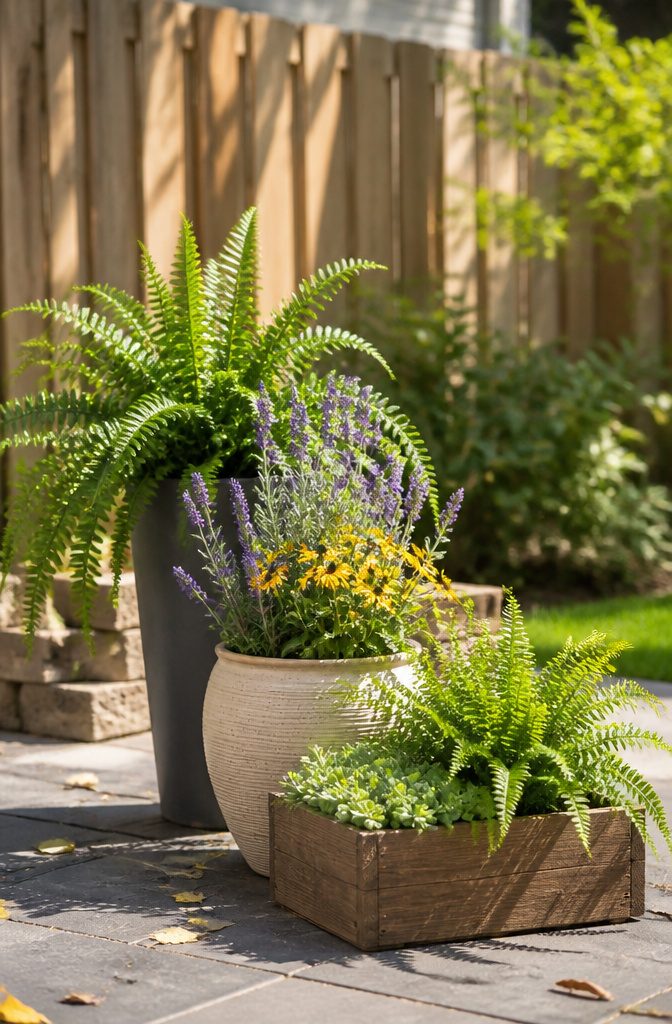
Black-eyed Susans, lavender, daylilies, coneflowers and sedum are all budget-friendly and resilient. Check which varieties suit your climate and soil before you buy, and space them properly at planting.
8. Outdoor Bar
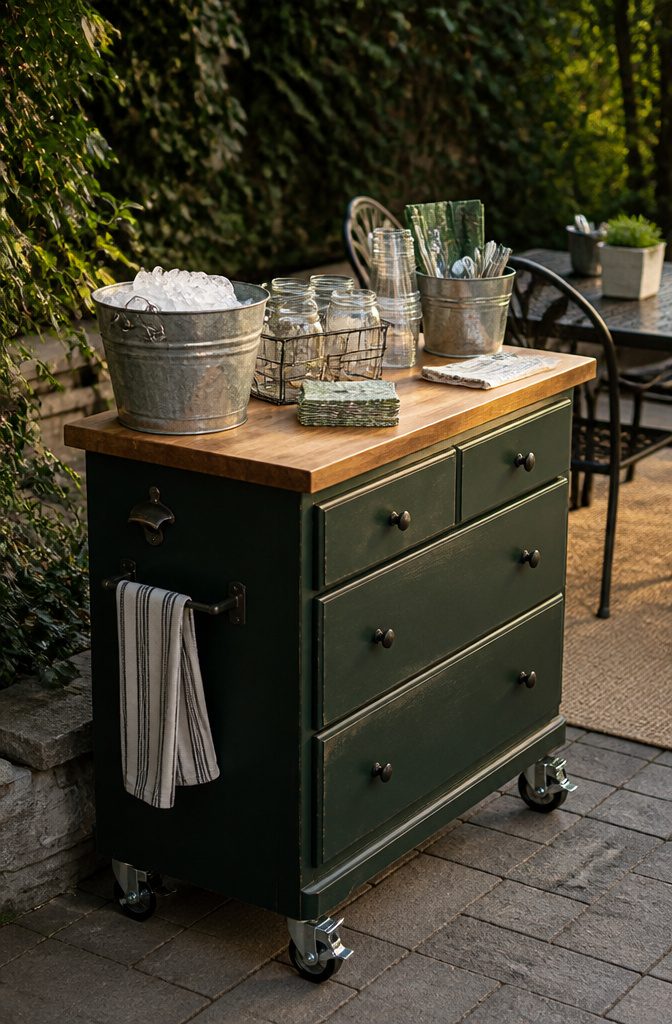
An old bookcase or dresser makes a compact patio bar for $80–$250, including a butcher-block top and locking casters. The casters let you park it against the wall on quiet days and roll it out when guests arrive.
Sand the piece, prime it, and paint it with exterior-grade paint so it holds up outside.
Navy or hunter green looks deliberate. If you rent or have an HOA, check what colors are allowed first.
Set galvanized buckets on top for ice, mason jars for utensils, and wire baskets for napkins and mixers.
Stock acrylic glassware instead of glass, since a dropped tumbler on pavers is a hazard for bare feet. Screw a bottle opener and a towel hook to the frame.
Recommended Products

Premiun Quality: Plant hangers made by heavy duty metal construction, coated with weather proof and rust proof black finish, provide long-term durability and stability during your use; Each of the hanging plant brackets can support up to 10 lbs

35 LBS HEAVY LOAD CAPACITY: Solid steel construction delivers superior strength for heavy planters, hanging baskets, orchid hooks and garden tools
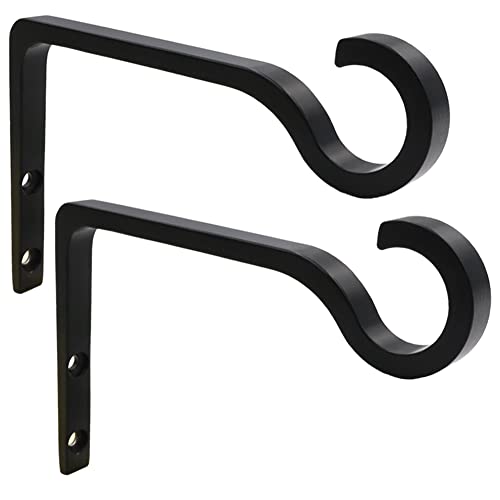
【STRONG QUALITY MATERIAL】QIEGL hanging plant bracket is made of solid and lightweight aluminum alloy. The surface of plant wall hooks is made of Matt special coating, which makes the paint surface smooth and more texture, and more rust and corrosion resistance, and it is more sturdy and durable than ordinary hooks. Edge rounded design, don’t worry about scratching your hands.
9. Hammock or Swing
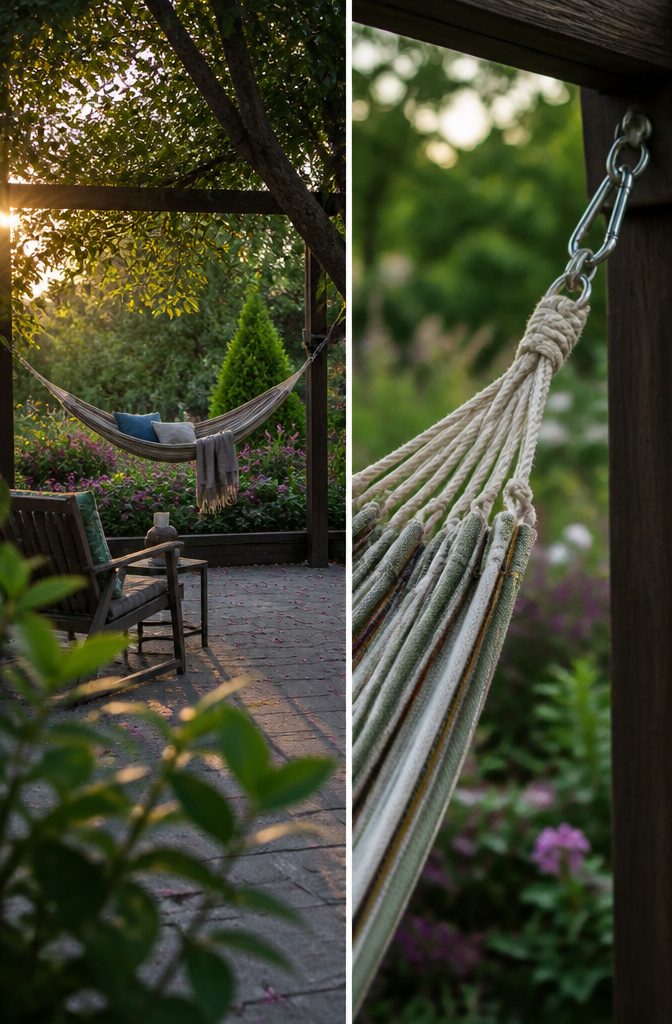
A hammock or swing costs $40–$180 and gives a patio something furniture can’t: a place to lie back.
Hang it from a mature tree or a sturdy beam, using heavy-duty eye bolts rated for at least 250 lbs. Check the rating before you buy, since hardware without one is a guess.
Brazilian-style fabric hammocks suit compact patios.
A rope swing gives a more coastal look. Face either one toward your best view, such as the sunset or a flower bed, and add throw blankets and weather-resistant pillows so it’s comfortable to stay in.
Store fabric hammocks indoors in winter to prevent mildew. Inspect ropes and chains for wear once a year, ideally before the first use of the season.
Recommended Products

Quick Dry: Dries quickly, making it ideal for high-traffic or outdoor environments.

These are the original Mad Mats, the Gold Standard for lasting quality and artful design.

Design: A tailored geometric border frames a balanced basketweave field to create a crisp, versatile foundation designed for outdoor living. Expect the tone to shift with your light and screen settings
10. DIY Fire Pit
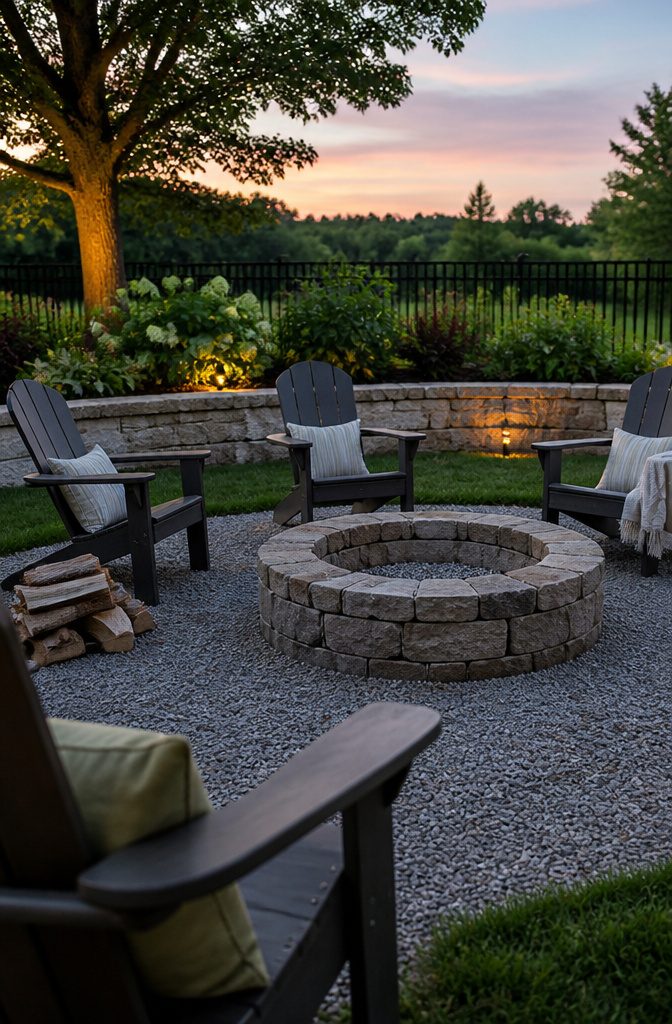
Call your city or county office before you buy anything. Fire pit rules differ by location, and a pit built against them can mean a fine or a teardown.
Once you have the go-ahead, local stone, recycled bricks, or concrete blocks keep the cost low, and a circular ring suits most yards and gives people a natural conversation circle.
The foundation matters more than the stonework. Clear the ground, level it, and spread a gravel base before you stack the first course, so the ring doesn’t shift or settle.
Masonry tools help you cut and align pieces cleanly. Plan your seating around the pit at the same time, since the chairs decide how often you actually use it.
Recommended Products

Perfect for refinishing and protecting exterior wood such as picnic tables, chairs, swing sets and more

ANTI-SLIP FLOOR COATING: Provide your surfaces with a durable, skid-resistant finish with FixALL Skid Grip Anti-Slip Coating.

HIGH-TRAFFIC DURABILITY: Engineered to withstand heavy foot traffic, daily use, and repeated cleaning. This heavy-duty formula is ideal for porches, patios, basements, steps, and walkways where long-term wear resistance is required.
11. DIY Planters and Container Gardens
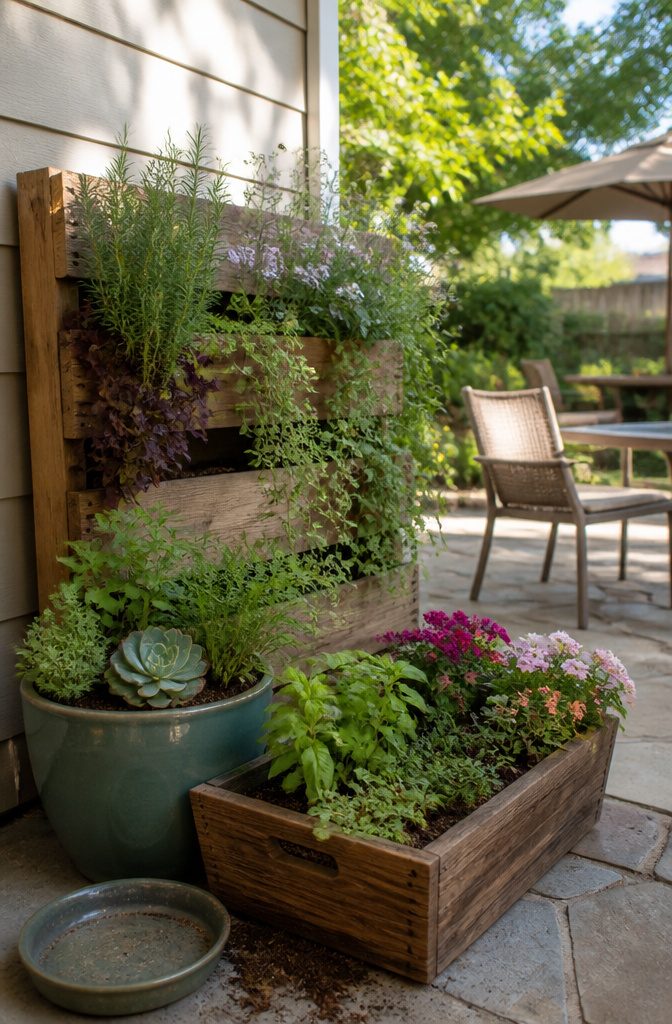
Old containers and wooden pallets cost almost nothing, and concrete mix can be cast into any shape you can build a mold for.
Whichever you use, drill drainage holes before you plant, since standing water rots roots and soaks a wooden box from inside.
Match plants to your climate and to the sun the spot actually gets. Herbs, succulents and trailing plants all do well in pallet planters or small pots.
Group containers that need the same light and water, then vary the heights and textures: a tall planter at the back, a ceramic pot in the middle, a low wooden box in front.
Pair flowering plants with foliage so the group still looks good when the blooms fade, and expect watering needs to shift with the seasons.
12. Vertical Garden and Painted Trellis
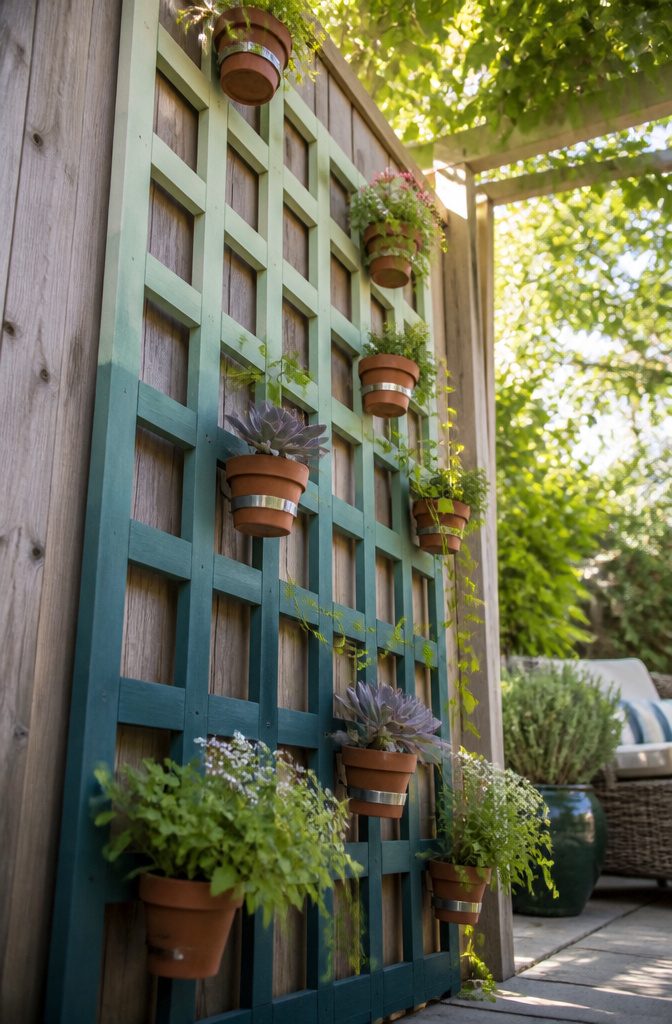
A fence or wall already gives you something to hang plants from, so a small patio can grow upward instead of outward. Wooden pallets, hanging organizers and simple frames all hold pots or planting pockets without much building.
Herbs, compact flowering plants and drought-resistant succulents suit vertical setups. Group them by light and water: succulents together on the sunniest stretch, thirstier herbs together where watering is easy.
Paint a trellis in a bold color using exterior-grade paint and several thin coats. Thick coats drip and cover unevenly.
For an ombré look, fade one color from dark at the bottom to light at the top. Pick a shade that echoes something already in your yard.
13. Repainted Old Furniture
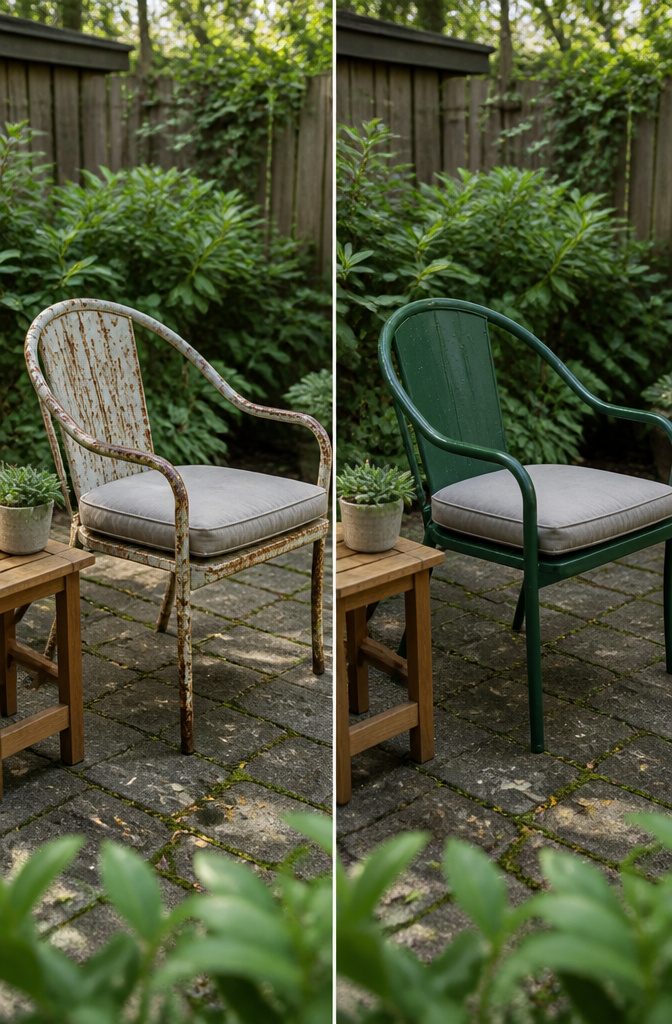
Weathered wood, metal and wicker furniture can be repainted instead of replaced, which costs far less than buying new. Buy exterior-grade paint made for outdoor furniture, in a formula that suits your material.
Prep decides how the finish turns out.
Scrub off dirt, scrape away any loose paint, and sand until the surface feels smooth. Then brush on primer, which helps the paint stick and last longer.
Choose a color that works with what’s already in your yard, like the green of your shrubs or the shade of your fence.
A bolder shade is fine too, since the space is yours. If you live under an HOA, check which colors are allowed before you buy the paint.
14. Garden Shed Makeover
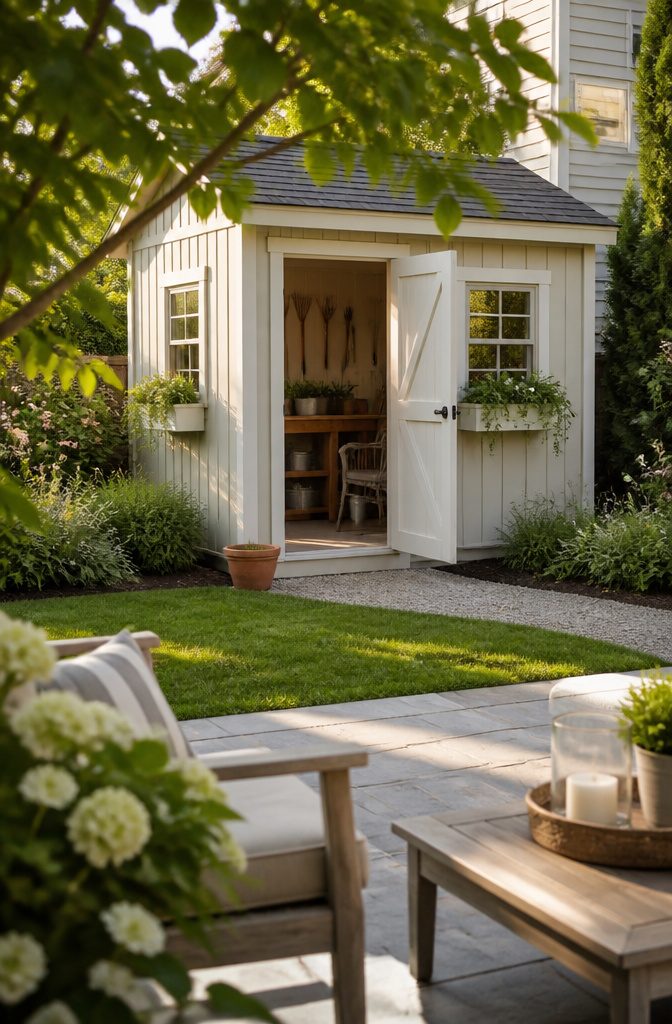
A shed sits in your sightline every time you look out from the patio, which makes it one of the cheapest big changes in the yard.
Repainting the exterior does the most. Match the color to your house trim or fence so the shed reads as part of the yard instead of a leftover.
Add a window box under each window and fill it with trailing plants, so the wall has something living on it.
Then give the inside a job. A potting bench and a row of hooks make a gardening supply station.
A swept floor and a chair make a small hangout spot, and with the clutter gone it also works as a kids’ playhouse or a quiet corner for an outdoor office.
Budget Range and Priorities
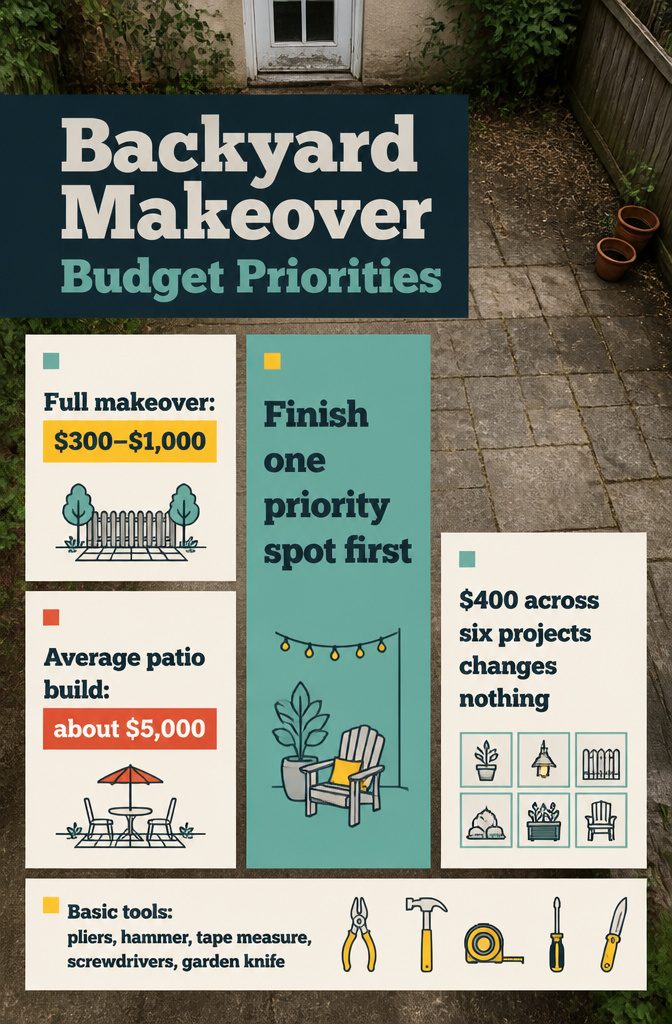
A full backyard makeover fits inside $300–$1,000. The roughly $5,000 that an average patio build runs is out of reach for most budgets, and you can skip it.
Walk the yard first and write down what bothers you most: no place to sit, a bare corner, a dull view from the back door. Spend on that spot before anything else.
One finished area changes how the whole yard reads, while $400 spread across six half-done projects changes nothing. Social feeds make every add-on look necessary, so set a total before you shop and hold to it.
The tools are cheap or already in a drawer: pliers, a hammer, a tape measure, screwdrivers, and a garden knife.