A rock bed costs 2–3 times a mulch application, and the higher price may pay back in about 2–3 years through water savings or sod replacement.
Weeds are where people go wrong: seeds sprout in the leaf litter and dust that settle between the stones, so fabric underneath only blocks what comes up from below.
1. Rock or Mulch for Your Bed
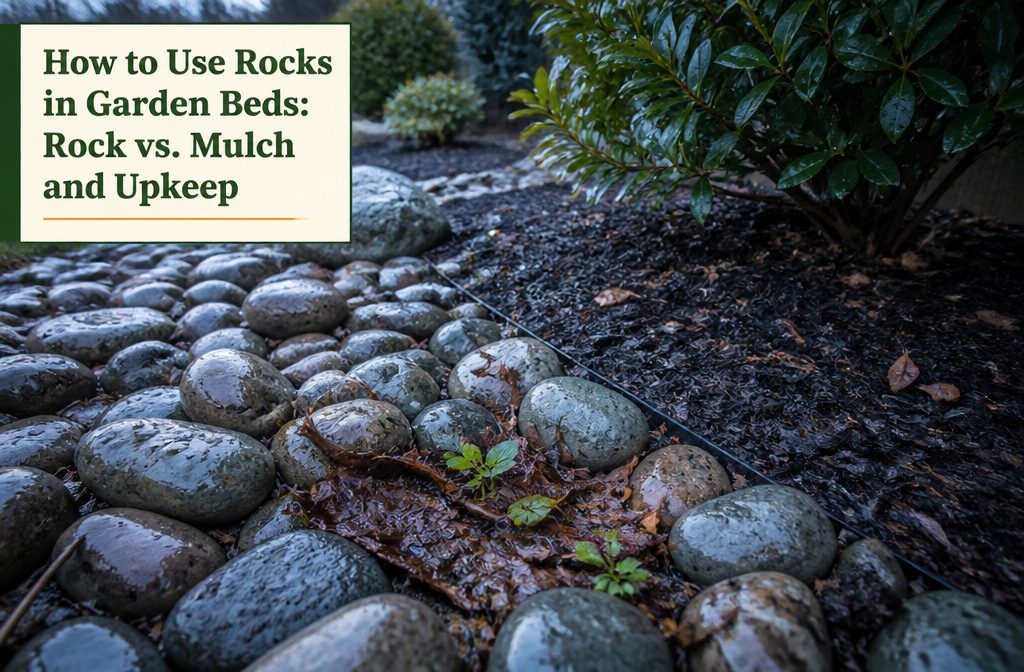
Rock mulch means decorative gravel, from pea-size to golf ball size.
It wins where drainage is poor, for plants that like drier soil, and on high-traffic strips. Skip it under heavy leaf-droppers, since leaves lodge between the stones.
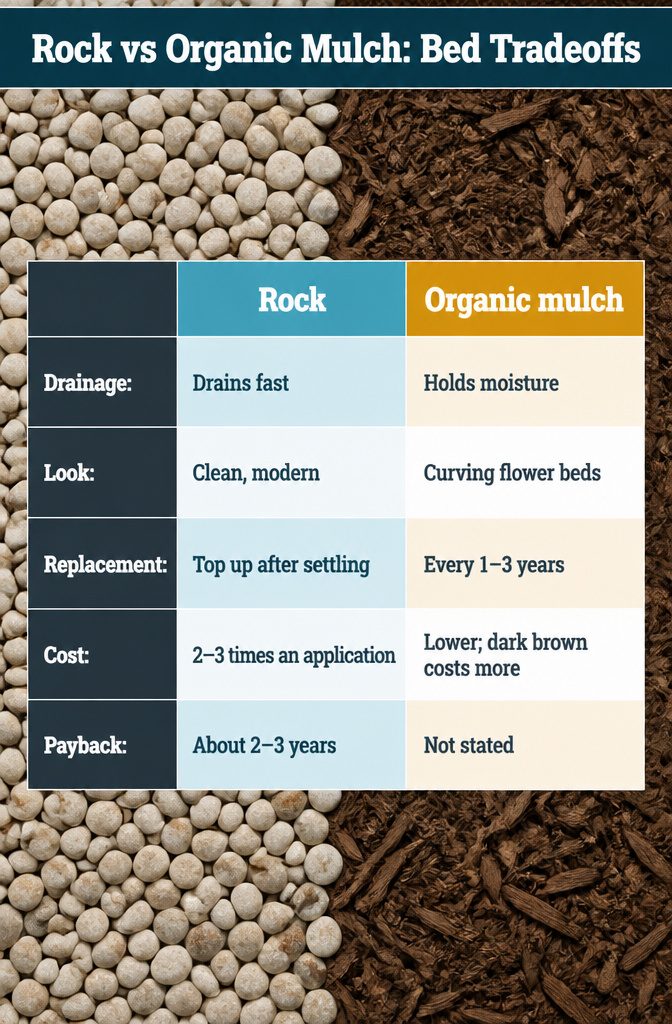
| Rock | Organic mulch | |
|---|---|---|
| Drainage | Drains fast | Holds moisture |
| Look | Clean, modern | Suits curving flower beds |
| Replacement | Top up after settling | Every 1–3 years |
| Cost | 2–3 times a mulch application | Lower; dyed dark brown costs more but fades less |
Rock beds may repay the higher price in about 2–3 years through water savings or sod replacement.
Recommended Products
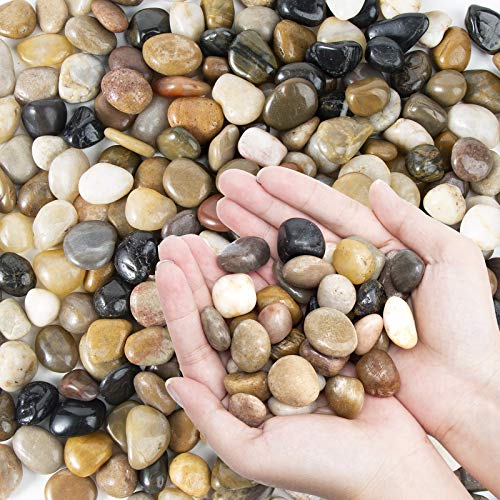
Natural Stones: This river rocks are natural lightly polished for smooth effect, comes in a variety of natural colors, Resists fading for long-lasting beauty. The color of this river rock is natural so it may include a variety of different shades of browns, whites and black rocks. (rocks are natural and as a result some may be broken or out of shape, oval or round, thick or thin.

100% PERMEABLE ROCK GLUE FOR LANDSCAPING AT AN UNBEATABLE VALUE: Our 100% permeable stone glue covers up to 200 sq ft, securing rocks, pea gravel, pebbles & decomposed granite with lasting strength, while staying permeable to support soil hydration & nutrient flow

LOCKS ROCK IN PLACE - STOPS SCATTERING & WASHOUTS - Tired of gravel blowing into your lawn, driveway, or flower beds? DOMINATOR Rock Anchor bonds decorative stone together for a solid, stable surface that resists wind, rain, pets, kids, leaf blowers, and heavy weather.
2. Maintain an Existing Rock Bed
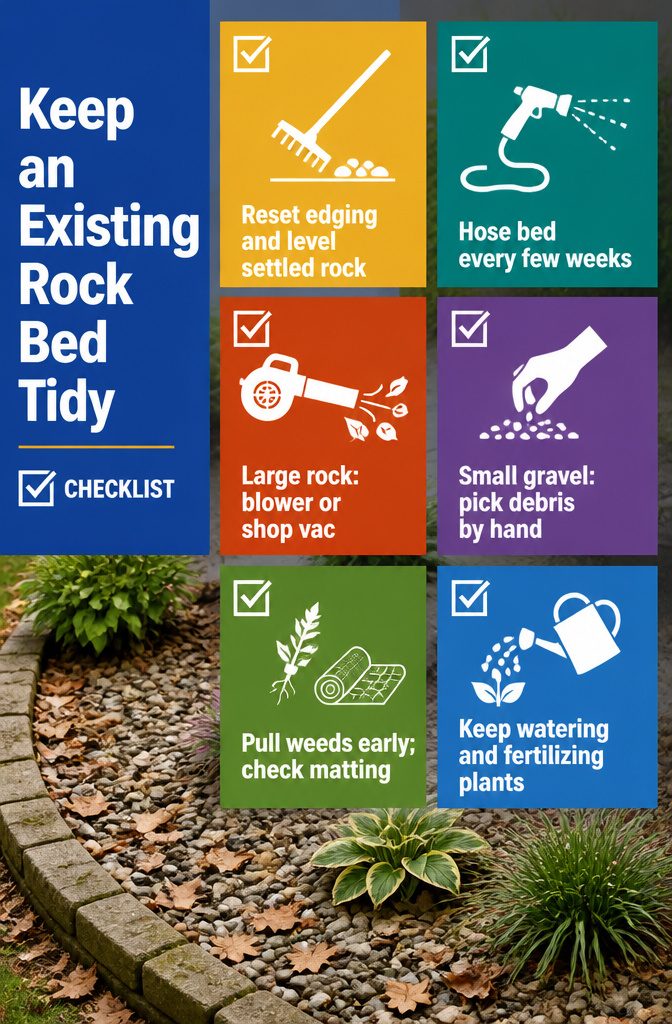
Rock lowers upkeep but does not remove it, and an older bed will show its weeds. Four jobs cover it:
- Containment: Reset the edging, rake the rock level, and top up spots where it has settled.
- Cleaning: Hose the bed down every few weeks to clear surface buildup. Use a leaf blower or shop vac on large rock, and watch for flying stones. Pick debris out of small gravel by hand, since it would get sucked up or blown away. A brush with dish soap or white vinegar removes stains, mold, and fungus.
- Control: Pull weeds early, and check that the matting under the rock is still in place.
- Conservation: Keep watering and fertilizing the plants. Rock doesn’t do that for them.
Recommended Products

Professional Grade Weed Barrier: LAVEVE weed barrier fabric is made of woven polypropylene material. Its high-density and permeable characteristics effectively stop weed growth and protect soil health so your plants can grow well.
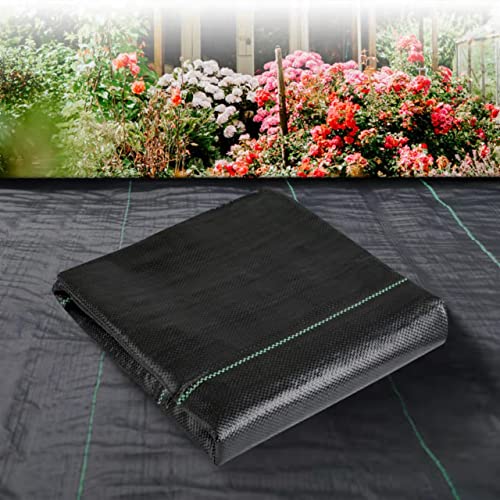
Premium Weed Barrier Fabric:Weed barrier landscape fabric is a type of geotextile fabric that is commonly used in landscaping and construction.With excellent weed control properties, providing a clean and tidy landscape.Very strong and durable,Pro landscape weed barrier will provide you with premium weed protection for a very long time.

Professional Grade Weed Barrier: LAVEVE weed barrier fabric is made of woven polypropylene material. Its high-density and permeable characteristics effectively stop weed growth and protect soil health so your plants can grow well.
3. Ways to Use Landscape Rocks
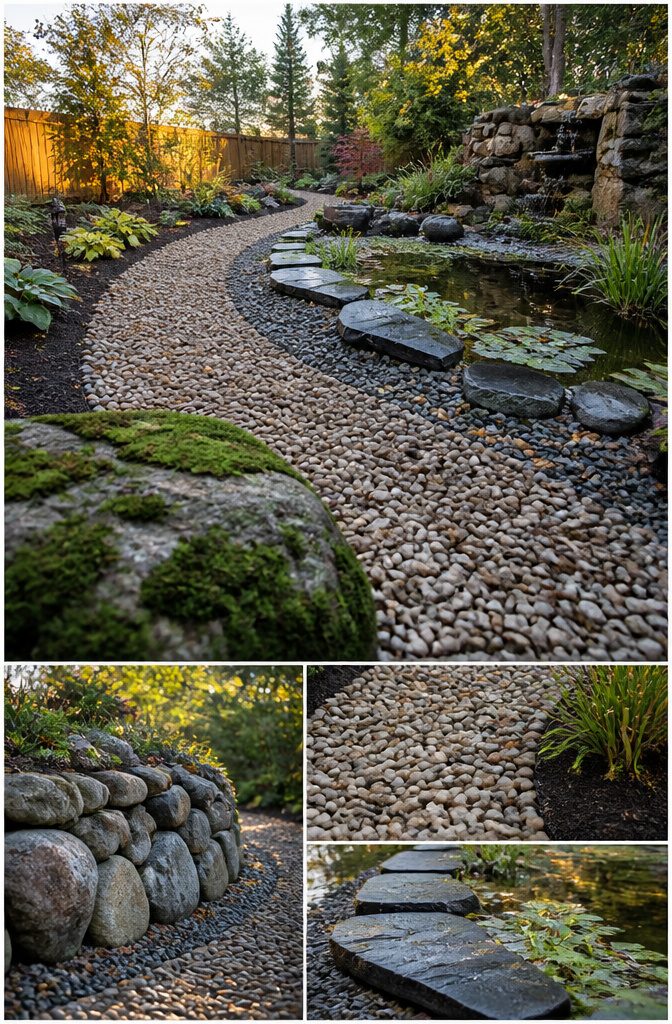
Match the rock size to the job:
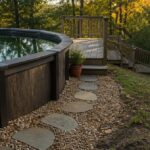
- Pathways and walkways: Use 40mm round natural washed rock or 7mm washed Gyra rock. The rounded edges are comfortable underfoot.
- Bed borders: A rock edge outlines the bed and gives plants a clean, structured frame.
- Boulders and rock walls: Placement and scale decide whether a boulder reads as a focal point. Mix sizes and textures, such as 4 to 14-inch river rock.
- Water features: Flat, smooth rocks make a natural edge for ponds, waterfalls and fountains. 20 mm rundle rock adds texture.
- Rock gardens: River rock works especially well for a miniature landscape built from several rock types.
- Backdrop: Rock behind a fountain or statue makes it stand out.
Weed Control in Rock Beds
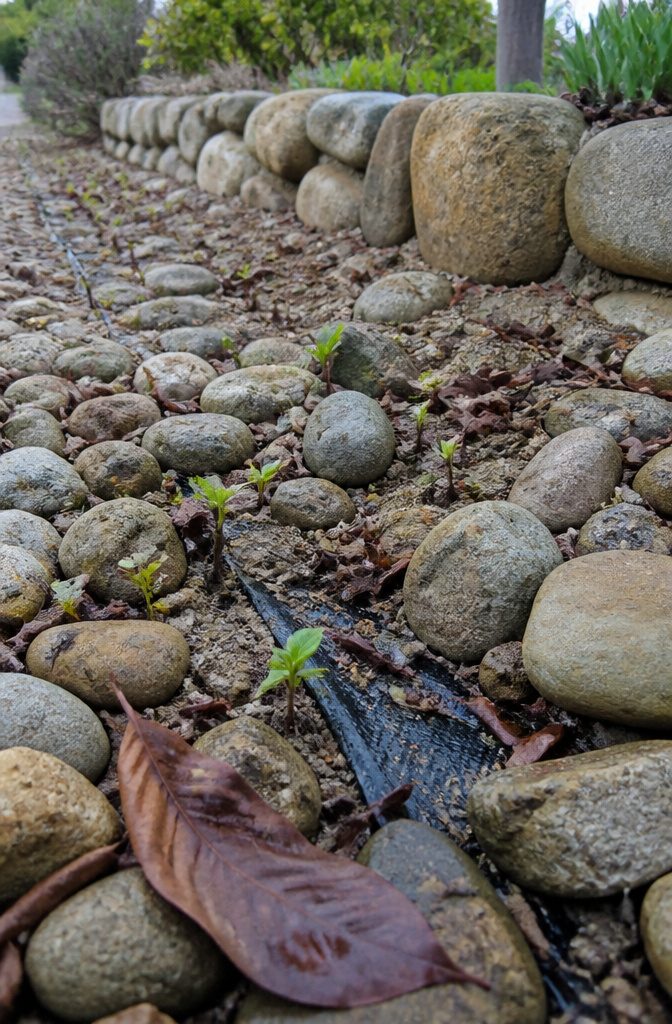
Rock cuts down weeds but never stops them. Seeds land on top of the stone and sprout in the leaf litter and dust that settle between the pieces, so fabric or matting underneath only blocks what comes up from below.
Older beds get harder to weed as that debris builds, and worn plastic that has stopped doing its job makes it worse.
Pull weeds by hand while they are small, and spot treat the rest. If you use a preemergent herbicide, apply it in spring, before weed seeds start to grow, and follow the package directions.
Ground cover can help crowd weeds out, but only when you plant it in the soil beneath the rock. Plastic under the stone makes it hard for ground cover to spread.
Recommended Products
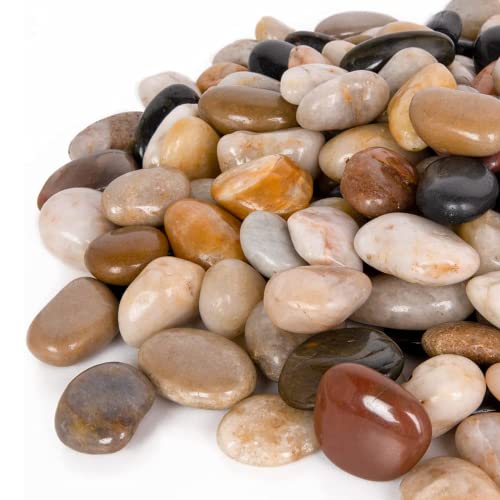
[SAFE & NON-TOXIC MATERIAL] - These river rocks are made from natural river stones, ensuring they are safe and non-toxic. Perfect for aquariums, they provide a beautiful and secure environment for fish and plants. Ideal for any DIY enthusiast looking to enhance their indoor or outdoor space with peace of mind.

Used Book in Good Condition

【25PCS Painting Stones】This is a set of 25 river rocks for painting, 2-3" in size. Please pay attention to the size. Uniform size to meet your various painting needs and painted effect stones
How Rock Affects Plants and Soil
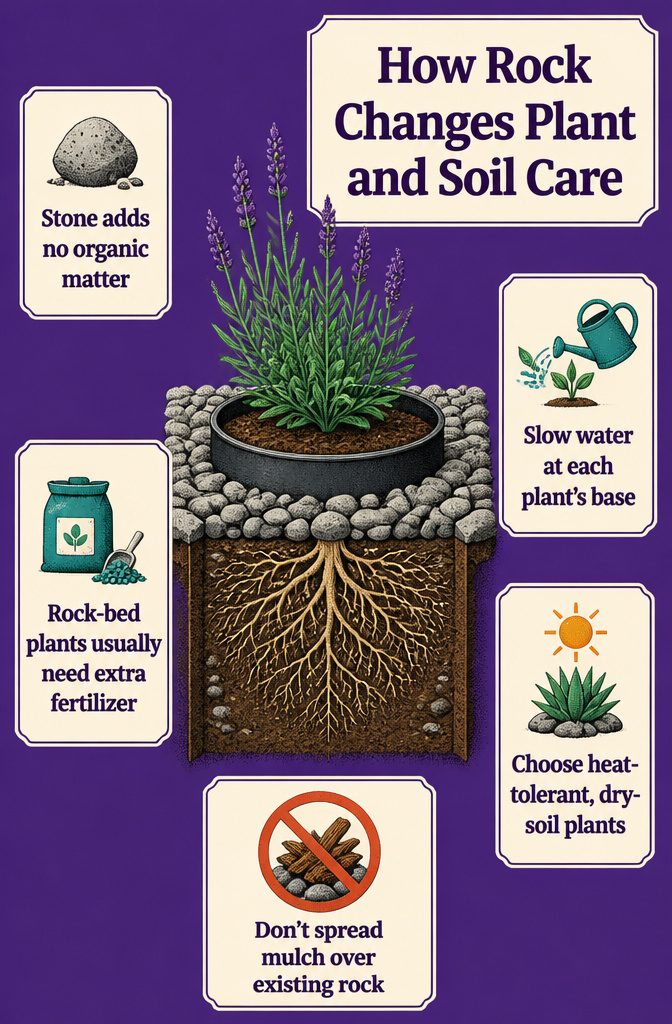
Rock never breaks down, so it feeds the soil nothing. Bark and wood chips crumble into organic matter over time, but stone just sits there.
Plants in a rock bed usually need extra fertilizer. Water in dry fertilizer well, or use a water-soluble product poured over the root area.
Water slowly at the base of each plant, because stone makes it harder for water and nutrients to reach the soil. A ring or edging around each plant helps.
Stone holds heat and drains fast, so pick heat-tolerant plants that like drier soil. Don’t spread mulch over an existing rock bed.
The layers make later digging harder and limit water and nutrient access. As the mulch decomposes, it builds soil between the stones.
Recommended Products

Spiral carved texture adds a raised tactile surface that feels comfortable to rub and helps the palm stone stay secure in the hand during quiet moments.

Powerful Cultivator: Electric tiller cultivator cultivates up to 6.3" wide and 6" deep, providing efficient soil preparation for planting, aerating, and breaking up compacted soil; For small areas

【Light Switch Cover Decorative Size】Available in 1-Gang to 4-Gang sizes (Toggle/Rocker), seamlessly matching your existing switches for a flush, invisible upgrade.
Frequently Asked Questions
Recommended Products

【Tired of Constant Yard Maintenance? Keep Your Landscape Neat with Ease!】Tired of mulch scattering, gravel shifting, and spending weekends reworking your yard? End the frustration and skip the high-cost landscapers—Shabebe Mulch hold everything in place! This strong, fast-drying adhesive keeps mulch, pebbles, and pine straw perfectly positioned, so your garden stays flawlessly tidy without the hassle.

LOCKS ROCK IN PLACE - STOPS SCATTERING & WASHOUTS - Tired of gravel blowing into your lawn, driveway, or flower beds? DOMINATOR Rock Anchor bonds decorative stone together for a solid, stable surface that resists wind, rain, pets, kids, leaf blowers, and heavy weather.

【READY TO USE MULCH BINDER — NO MIXING, NO MESS, JUST SPRAY】 Skip the measuring cups and complicated ratios. This ready to use mulch binder comes pre-mixed for fast application straight from the bottle. Simply pour into a garden sprayer or use with an electric sprayer (not included) to secure bark, wood chips, pine straw, and decorative landscape materials with less effort and more consistent coverage.
When are rocks in a garden bed better than mulch?
Rock is the better pick where drainage is poor, in open areas without plants, and on high-traffic strips where people cut across.
It also works well as a backdrop for a fountain or statue. Skip it under trees that drop a lot of leaves, because the leaves lodge between the stones.
Is rock or mulch better for curb appeal?
Neither wins outright; it depends on your taste and the style of the bed.
Rock gives a clean, modern look, especially with crisp edges and ornamental grasses. Mulch suits curving beds filled with colorful annuals and perennials.
Which needs less maintenance, rock or mulch?
Rock needs less, but it is not maintenance-free.
Plan on a hose-down every few weeks, a top-up where the stones settle, and early weed pulling. Organic mulch breaks down and fades, so it has to be replaced every 1–3 years.
Do plants in a rock bed need extra fertilizer?
Usually, yes.
Rock never breaks down, so it adds nothing to the soil, while bark and wood chips turn into organic matter over time. Water dry fertilizer in well, or pour a water-soluble product over the root area.
Can you put mulch on top of landscaping rock?
You can, but it is not recommended. The layers make later digging harder and limit how much water and nutrients reach the soil.
Can you plant ground cover in a rock bed to control weeds?
Yes, as long as the ground cover is planted in the soil beneath the rock, not just scattered over the stones.
It can help crowd out weeds, though seeds will still land on top and need pulling. Plastic under the rock makes it hard for ground cover to spread.
How can you use landscaping rocks in the yard?
Use them for pathways, bed borders, boulders and rock walls, edging around ponds and fountains, rock gardens, and backdrops behind a fountain or statue.
Match the size to the job: rounded washed rock such as 40mm is comfortable underfoot on paths, and flat, smooth rocks make a natural water edge.